
Vinted, eBay or Etsy sent you a report about your sales: what do you do with it?
Hamster team · Updated · Checked against GOV.UK
The short answer
Check it, keep it, and use it to answer one question: were you trading? Since 1 January 2024, platforms must report sellers' details and earnings to HMRC and give you a copy, but GOV.UK says this does not automatically mean you owe tax. If you were only selling your own unwanted things, there's usually nothing to do; if you were trading and your trading income was over £1,000 in the tax year, you need to tell HMRC.
What the report is
Since 1 January 2024, UK digital platform rules mean sites and apps such as Vinted, eBay, Etsy and Depop must collect details about their sellers and report them, with what they earned, to HMRC. They collect it each calendar year and send it to HMRC by the following January. Platforms must give you a copy of what they reported, and that's the report you've received.
The platform reports the details it collected from you (for an individual seller: your name, address, date of birth and National Insurance number) and your income on that platform.
Who isn't reported: GOV.UK says your details won't be reported if you make fewer than 30 sales of goods in a calendar year and receive less than 2,000 euros (about £1,700) for them. That exemption is for selling goods. If you provide services through a platform, such as delivery, driving or freelancing, expect to be reported whatever you earned.
What it shows, and what it doesn't
GOV.UK says the report shows the total you earned on the platform for the calendar year, less any fees, commission or taxes the platform deducted, broken down into quarters. That makes it useful, but not something you can copy onto a tax return:
| The platform's report | What Self Assessment needs |
|---|---|
| Calendar year: 1 January to 31 December | Tax year: 6 April to 5 April |
| Earnings after the platform's fees | Income before any expenses |
| One platform only | All your side hustles added together |
| Doesn't say whether you were trading | Only trading income (or a capital gain) is taxable |
GOV.UK is clear that the report is meant to help you keep track, and that it does not replace your normal business records or tax calculations.
Does it mean you owe tax?
No. In HMRC's words, a platform reporting your details "does not automatically mean you owe tax". When HMRC announced the reporting, it said that people who occasionally sell unwanted items have no new tax to pay.
What matters is what you were selling:
- Your own unwanted things (clothes, toys, the contents of a loft): GOV.UK says you're unlikely to pay tax on these. One exception: a single item, or a set, sold for more than £6,000 may need checking for Capital Gains Tax.
- Things you bought or made to sell at a profit: that's likely to be trading. Trading income from all your side hustles is added together, and over the £1,000 trading allowance in a tax year, you need to tell HMRC.
Do I pay tax on Vinted, eBay or Depop sales? covers where that line sits in more detail.
Do I need to register? Check in 3 questions
Open the full toolEnter your side-hustle income and pick a tax year to see your answer. Want HMRC’s own version? Use HMRC’s checker.
What to do with it
- Check your details are right. If anything is wrong, contact the platform: it made the report.
- Decide whether you were trading. If you only sold your own unwanted things, file the report with your records and you're usually done.
- If you were trading, work out your income for the tax year. Use the quarterly figures, or better, your own records, for 6 April to 5 April. Then add back the fees the platform took: the payout to gross income calculator does the sum.
- Over £1,000 of trading income? Register for Self Assessment if you haven't. For 2025 to 2026 the registration deadline was 5 October 2026: see what to do if you missed it.
- Keep the report with your records. Our guide to what records to keep explains for how long.
Not sure? HMRC's free online platforms checker walks through it.
A worked example (invented figures)
Mia resells vintage clothes she buys at car boot sales. Her Vinted report for calendar year 2025 shows £3,240 of earnings after fees, by quarter: £520, £760, £1,180 and £780.
Her tax return for 2025 to 2026 covers 6 April 2025 to 5 April 2026, so the report isn't the right period. From her own sales records she works out:
- Sales in the tax year, before fees: £3,600
- Fees Vinted kept in the tax year: £410
- Stock she bought to resell: £1,150
Her income is £3,600, over £1,000, so she must register. Her costs (£410 + £1,150 = £1,560) beat the £1,000 allowance, so she claims them: profit £3,600 − £1,560 = £2,040. If her job already uses her Personal Allowance, that's £408 of Income Tax at 20%.
If she'd only been clearing out her own wardrobe, the same report would have meant nothing to pay.
Common mistakes
- Panicking. The report isn't a bill or a penalty. It's a copy of information the platform had to send.
- Copying the report onto your tax return. It's the wrong period and it's after fees.
- Forgetting other platforms. The £1,000 allowance is for all your trading income together.
- Ignoring it when you were trading. HMRC receives the same figures. If you owe tax you haven't declared, GOV.UK says that if you contact HMRC first, they may consider your case more favourably.
- Throwing it away. Keep it with your records, even if you owe nothing.
Keeping track
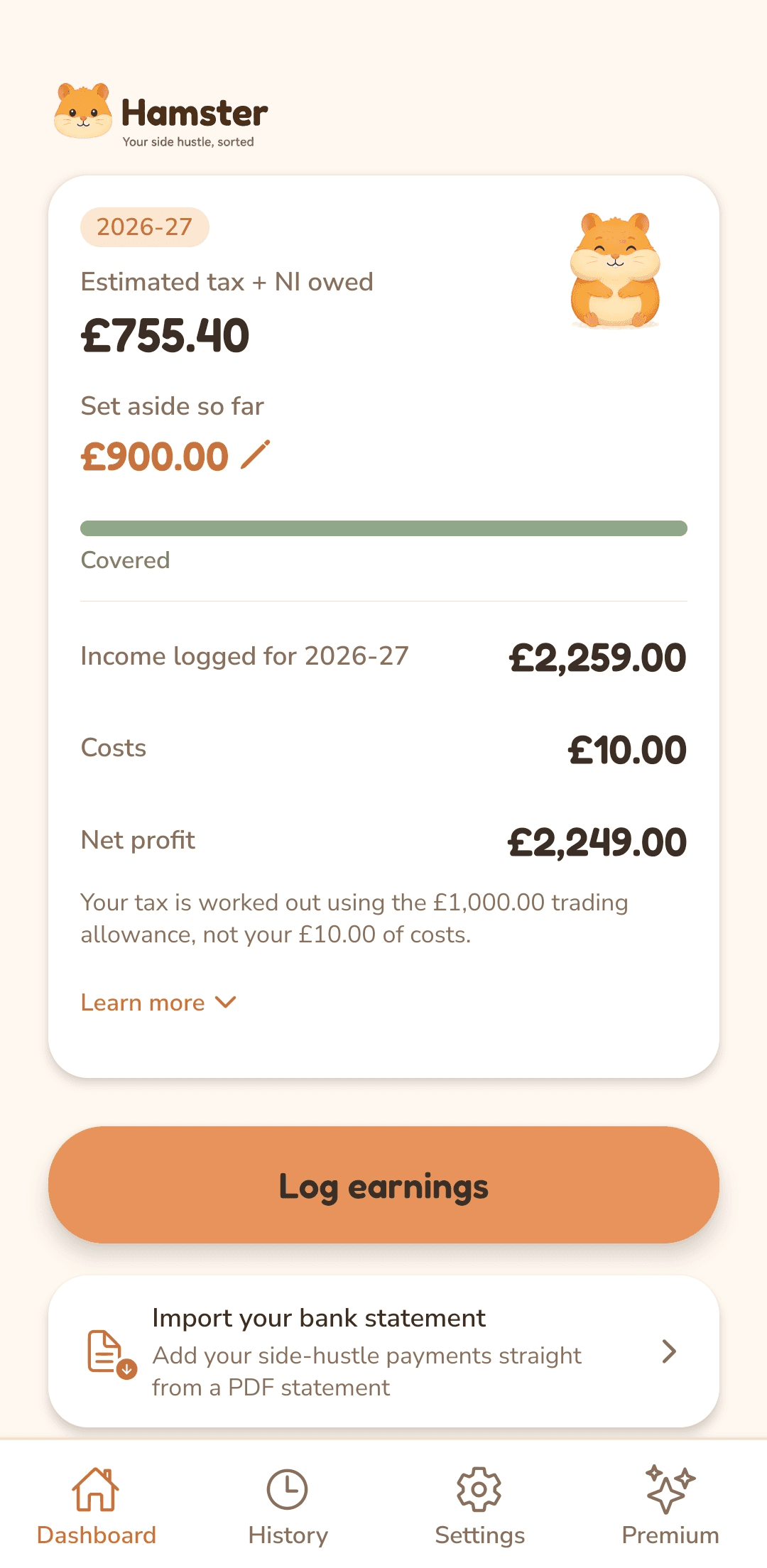
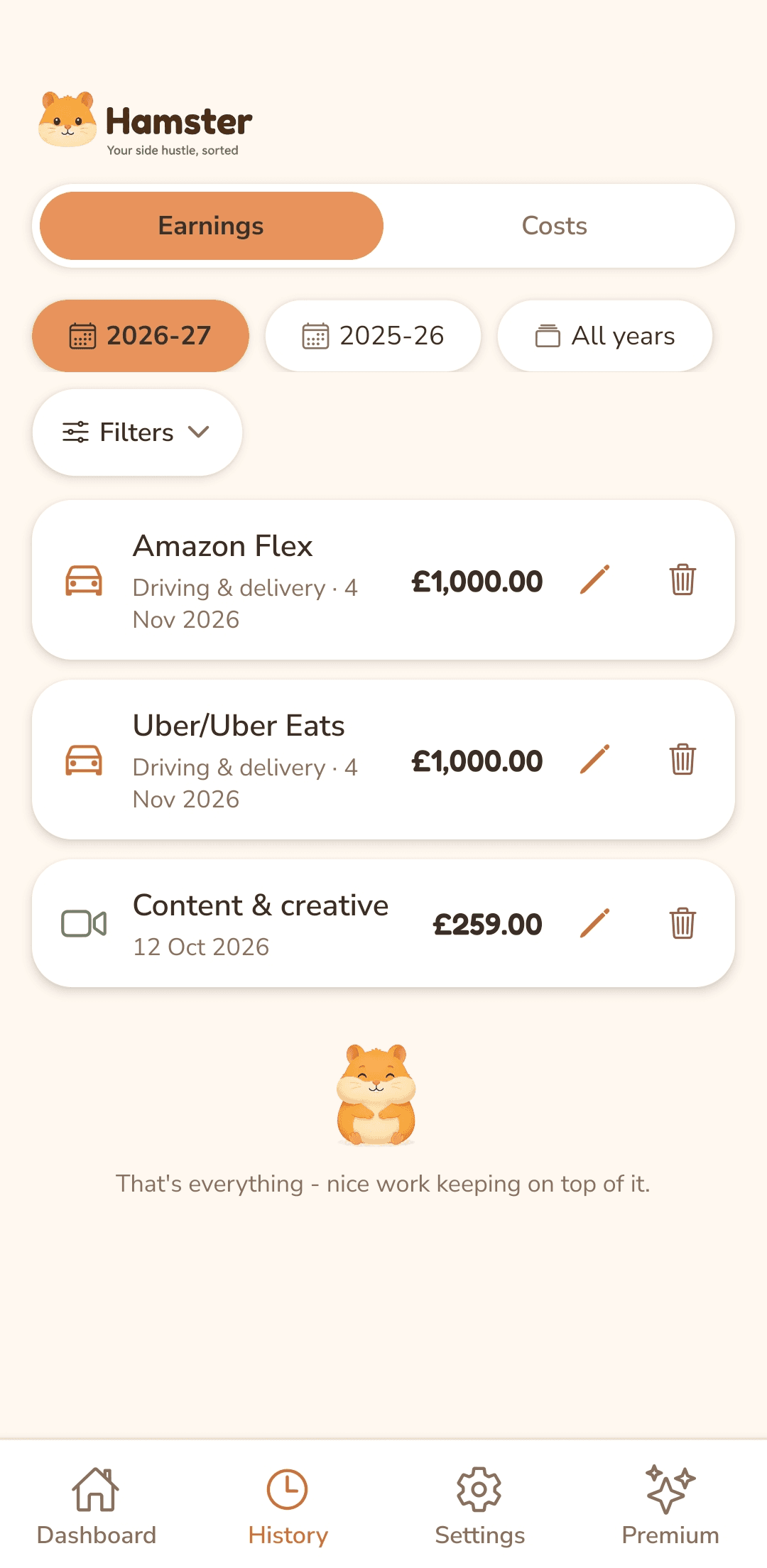
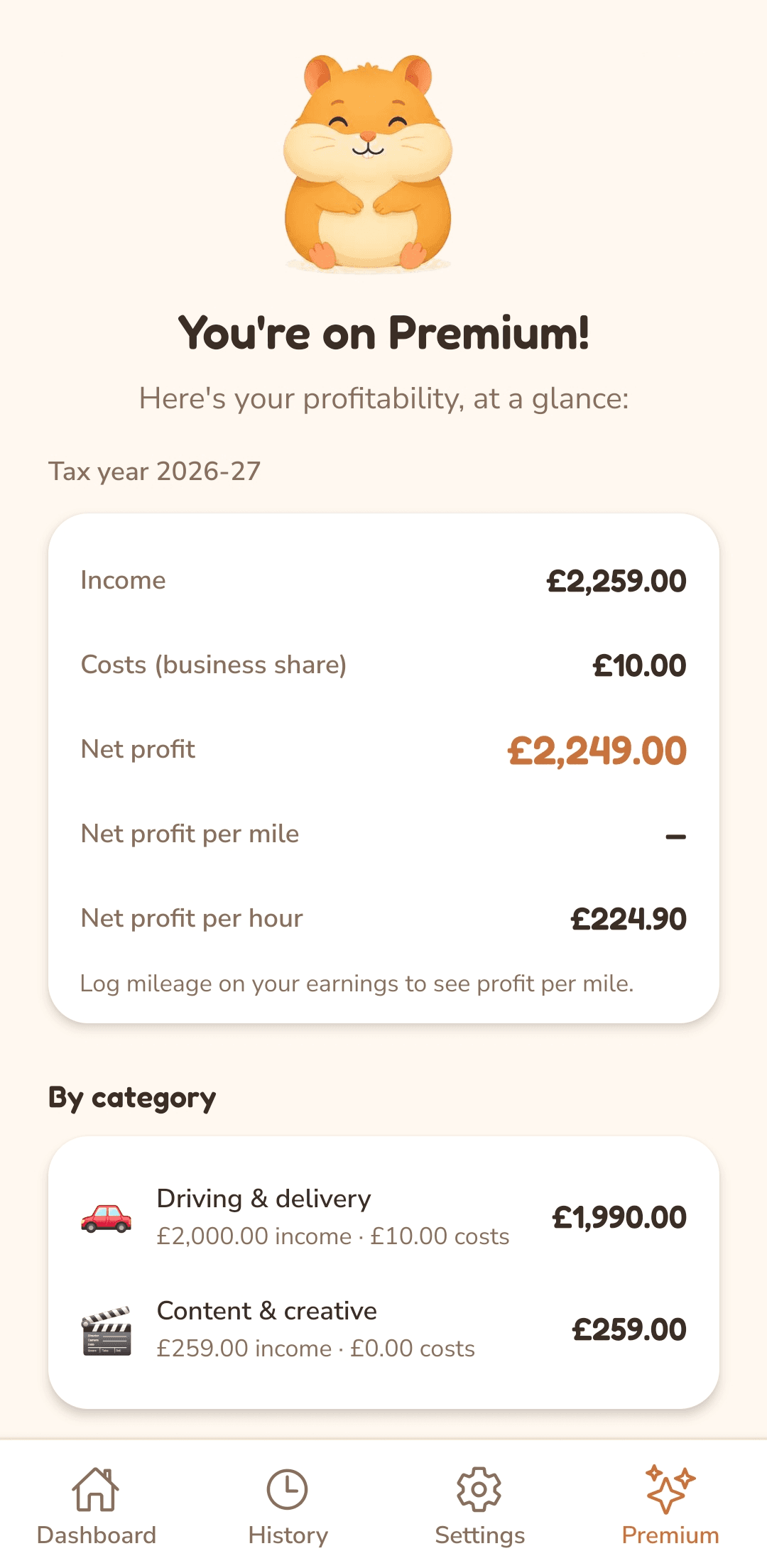
The report arrives once a year, for the wrong period. Your own records are what count, and keeping them as you go is easier. Hamster is a free app for Android and iPhone that logs your sales and costs by tax year. With Premium, you can add the payments from a PDF bank statement in one go with bank statement import, checking each one before it's saved.
See it in the app
Dashboard
History
Premium summaryPremium
Quick answers
- Why did Vinted, eBay or Etsy send me a report?
- Under rules that started on 1 January 2024, digital platforms collect sellers' details and report them, with their earnings, to HMRC each year. They must give you a copy of what they reported.
- Does the report mean I owe tax?
- No. GOV.UK says a platform reporting your details does not automatically mean you owe tax. You pay Income Tax if you're trading, and only on trading income over the £1,000 trading allowance.
- Who doesn't get reported?
- GOV.UK says your details won't be reported if you make fewer than 30 sales of goods in a calendar year and receive less than 2,000 euros (about £1,700) for them. Sellers of services, such as delivery or freelancing, don't have this exemption.
- Can I use the report's figures on my tax return?
- Not directly. It covers the calendar year (January to December), shows earnings after fees, and GOV.UK says it doesn't replace your own records. Self Assessment uses the tax year (6 April to 5 April) and income before expenses.
- I only sold my old clothes. Do I need to do anything?
- Usually not. GOV.UK says you're unlikely to pay tax on selling personal items from your home. Keep the report with your records, in case HMRC asks about it.
- What if the report is wrong?
- Contact the platform: it collected and reported the details. Keep your own records of what you sold, as they're what your tax figures should come from.
Sources
Last reviewed against GOV.UK. Figures are for the tax year named in each section. Report an error
This is general information, not personal tax advice. Rules and rates change: check the linked GOV.UK pages or speak to an accountant about your own situation.