
Free tool
Payout to gross income calculator
Platforms pay you after taking their fees, but your tax return starts from your income before expenses: so add the fees back to your payouts. The fees then count as a business cost, which you can claim as an expense, unless you use the £1,000 trading allowance instead.
It works in your browser: nothing you type is stored or sent anywhere.
Enter what the platform paid you and the fees it kept. Use the same period for both, such as the tax year from 6 April to 5 April.
An estimate, not tax advice. Check GOV.UK, or speak to an accountant about your own situation.
How it works
HMRC’s notes for the self-employment pages define turnover as the income your business received “before taking off any expenses”. Platform payouts arrive with the fees already taken off, so:
Payouts received + fees the platform kept = income before fees
Refunds are shown separately: they explain why a platform’s “total sales” can be higher still. The platform report you get under the digital platform rules shows earnings less fees, by calendar quarter, so it needs the same adding back, for the tax year.
Want the payouts without totting them up? Hamster’s bank statement import (Premium) picks side-hustle payments out of a PDF statement for you to check.
Worked examples (invented figures)
A year of reselling
Priya’s selling app paid £3,600 into her bank over the tax year. It kept £540 in selling and payment fees.
- Income before fees: £3,600.00 + £540.00 = £4,140.00
- Fees to claim as an expense (if not using the allowance): £540.00
With refunds
Ben’s marketplace paid him £2,150. It kept £310 in fees, and refunded £180 to two buyers who sent items back.
- Income before fees: £2,150.00 + £310.00 = £2,460.00
- Fees to claim as an expense (if not using the allowance): £310.00
- The platform’s sales total would show £2,640.00, including the £180.00 refunded
Questions people ask
- Do I report what I was paid or what I sold?
- Your turnover is the income your business received before taking off any expenses, according to HMRC’s notes for the self-employment pages. If the platform kept fees, the money in your bank is less than that, so add the fees back.
- Can I claim the platform’s fees?
- Fees for selling are a cost of running your side hustle. You claim them as expenses if you work out your profit using expenses. If you use the £1,000 trading allowance, you can’t claim any expenses, fees included.
- Where do I find the fees?
- Most platforms list fees in their sales or earnings reports. Since 2024 platforms that report you to HMRC must also give you a copy of what they reported, which shows earnings less fees, by quarter.
- The platform report covers January to December. Is that a problem?
- Yes, if you use it as it is. Platform reports cover the calendar year, but Self Assessment uses the tax year from 6 April to 5 April. Add up the quarters or months that fall inside the tax year instead.
- How does this tool treat refunds?
- It treats money the platform gave back to a buyer as money you didn’t receive, so it isn’t added back. That’s straightforward arithmetic, not a quoted HMRC rule; if refunds are a big part of your sales, check how to record them with HMRC or an accountant.
- Does the platform’s report mean I owe tax?
- No. GOV.UK says a platform reporting your details doesn’t automatically mean you owe tax. You pay tax if you’re trading (or make a capital gain), and only on trading income over the £1,000 allowance.
Sources
Related guides and tools
Last reviewed against GOV.UK. Report an error
See it in the app
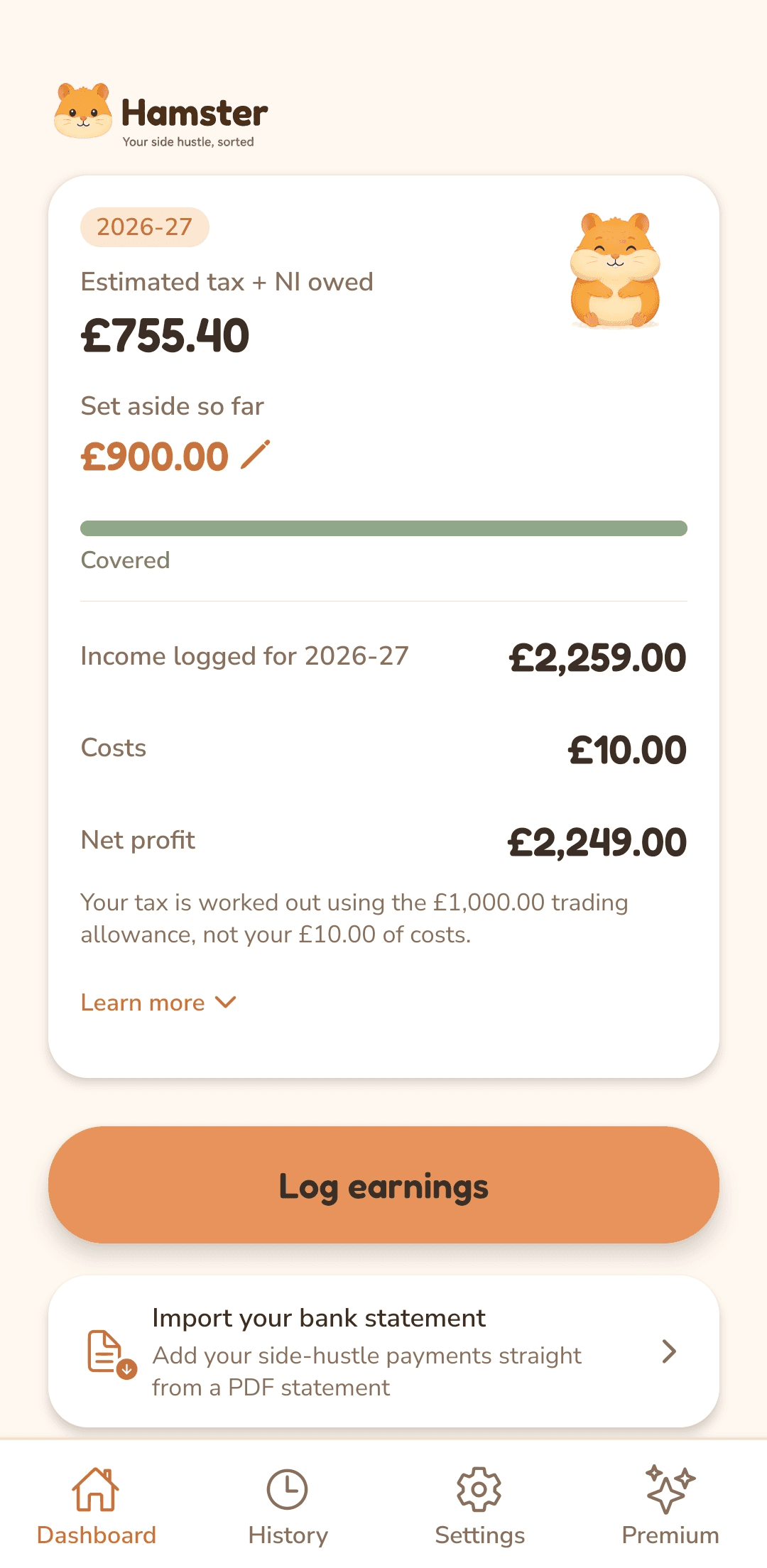
Dashboard
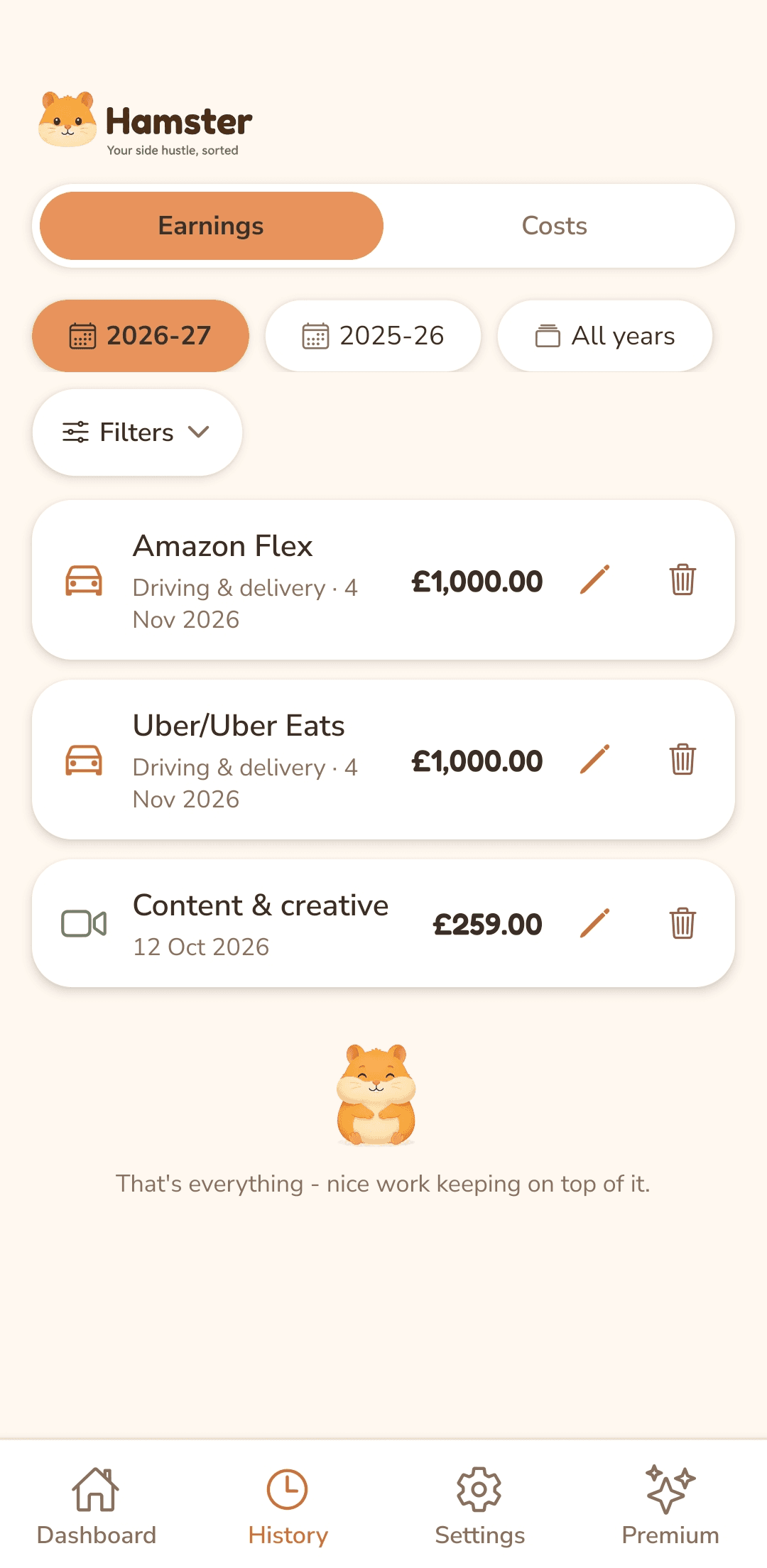
History
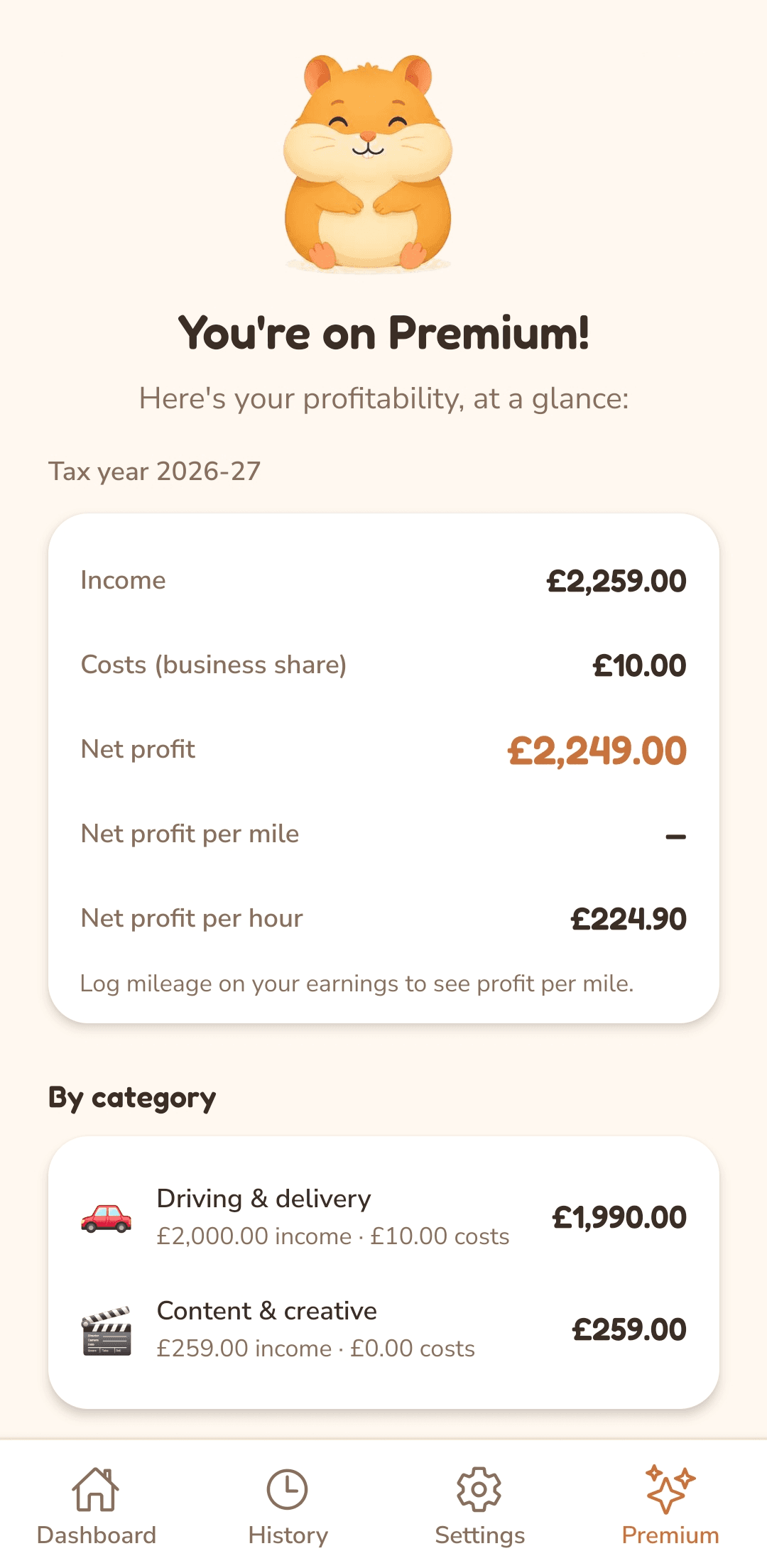
Premium summaryPremium
Free to download. Estimates, not tax advice.