
Received an HMRC 'nudge letter' about online selling? What it is and what to do
Hamster team · Updated · Checked against GOV.UK
The short answer
Don't panic, and don't ignore it. A letter like this usually asks you to check whether you've told HMRC about all your income, and it isn't a bill. First check it's genuine, then work out whether you were trading: if you only sold your own things, you may simply need to reply; if you owe tax, telling HMRC yourself is the best next step, and GOV.UK says HMRC may then consider your case more favourably.
What the letter is
"Nudge letter" is a nickname, not an HMRC term. It's used for letters in which HMRC asks you to check whether you've told it about all your income, and to put things right if not. Since 1 January 2024, digital platforms have had to report sellers' earnings to HMRC, which is one of the sources of information HMRC holds.
A letter like this isn't a tax bill or a penalty. It's a prompt. What matters is what your letter asks you to do, and by when, so read it carefully, more than once.
We can't tell you what a particular letter means for you, and this isn't legal advice. Here's a calm way through it.
Step 1: Check it's genuine
Scams pretending to be HMRC are common. Before you reply or pay anything:
- compare it with HMRC's list of genuine letters
- contact HMRC using details you find on GOV.UK yourself, not a phone number or link you're unsure of
- report anything suspicious to HMRC
Step 2: Work out whether you were trading
GOV.UK's platform guidance draws the line:
- Selling your own personal items, like the contents of a loft or wardrobe: you're unlikely to pay tax.
- Buying or making things to sell at a profit: you're likely to be trading.
- Providing services through a platform, like deliveries or freelancing: that's trading income too.
If you were trading, add up your trading income for each tax year (6 April to 5 April) from all your side hustles. Over the £1,000 trading allowance, you needed to tell HMRC. HMRC's online platforms checker walks through it.
Do I need to register? Check in 3 questions
Open the full toolEnter your side-hustle income and pick a tax year to see your answer. Want HMRC’s own version? Use HMRC’s checker.
Step 3: Respond
If you owe nothing, for example because you only sold your own things, do what the letter asks: if it asks you to confirm, reply and explain briefly. Keep a copy of your reply and anything you relied on, such as your sales history.
If you owe tax you haven't declared, GOV.UK's guidance on undeclared income says to tell HMRC as soon as possible, and that if you contact HMRC first, they may consider your case more favourably:
- Not registered for Self Assessment? Register, then file a return for each year. GOV.UK says you can declare income you haven't paid tax on from the last 4 years.
- Already registered but left income out? You can change your return within 12 months of its deadline; after that, you write to HMRC.
- Can't pay it all? File anyway and ask about a payment plan.
Interest and penalties may apply on tax paid late. HMRC works these out and will tell you.
A worked example (invented figures)
Ella makes and sells handmade earrings. In the 2024 to 2025 tax year she took £2,600 on a marketplace, spending £700 on materials and fees. She never registered, thinking it was a hobby. In 2026 she gets a letter from HMRC asking her to check her online selling income.
- She checks the letter against HMRC's genuine-letters list.
- She was making things to sell, so she was trading, and £2,600 is over £1,000.
- Her £700 of costs are less than £1,000, so the trading allowance is better: profit £2,600 − £1,000 = £1,600.
- Her salary already uses her Personal Allowance, so that's about £320 of Income Tax at 20%, before any interest or penalties HMRC adds.
- She registers for Self Assessment, files the 2024 to 2025 return, pays, and keeps a record of everything she sent.
When to get an accountant
You don't have to, but it's worth paying for help if:
- several tax years are involved, or the amounts are large
- you're not sure whether what you did counts as trading
- the letter mentions a check, an investigation, penalties or deliberate behaviour
- you have other complications, like rental income or income from abroad
Look for a qualified accountant or tax adviser.
Common mistakes
- Ignoring it. If you owe tax, GOV.UK says HMRC may consider your case more favourably if you contact it first.
- Replying to a scam. Check first, using GOV.UK.
- Over-declaring. Selling your own unwanted things isn't trading income.
- Guessing your figures. Use your sales history, platform reports and bank statements to work out each tax year.
- Doing nothing because you can't pay. File, then ask about a payment plan.
Getting your records in order
Whatever the letter says, good records make the reply easy. Our guide to what records to keep covers what HMRC expects. Hamster is a free app for Android and iPhone that keeps your side-hustle income and costs by tax year. With Premium, its bank statement import adds payments from a PDF statement in one go, read on your phone, and you check each one before it's saved.
See it in the app
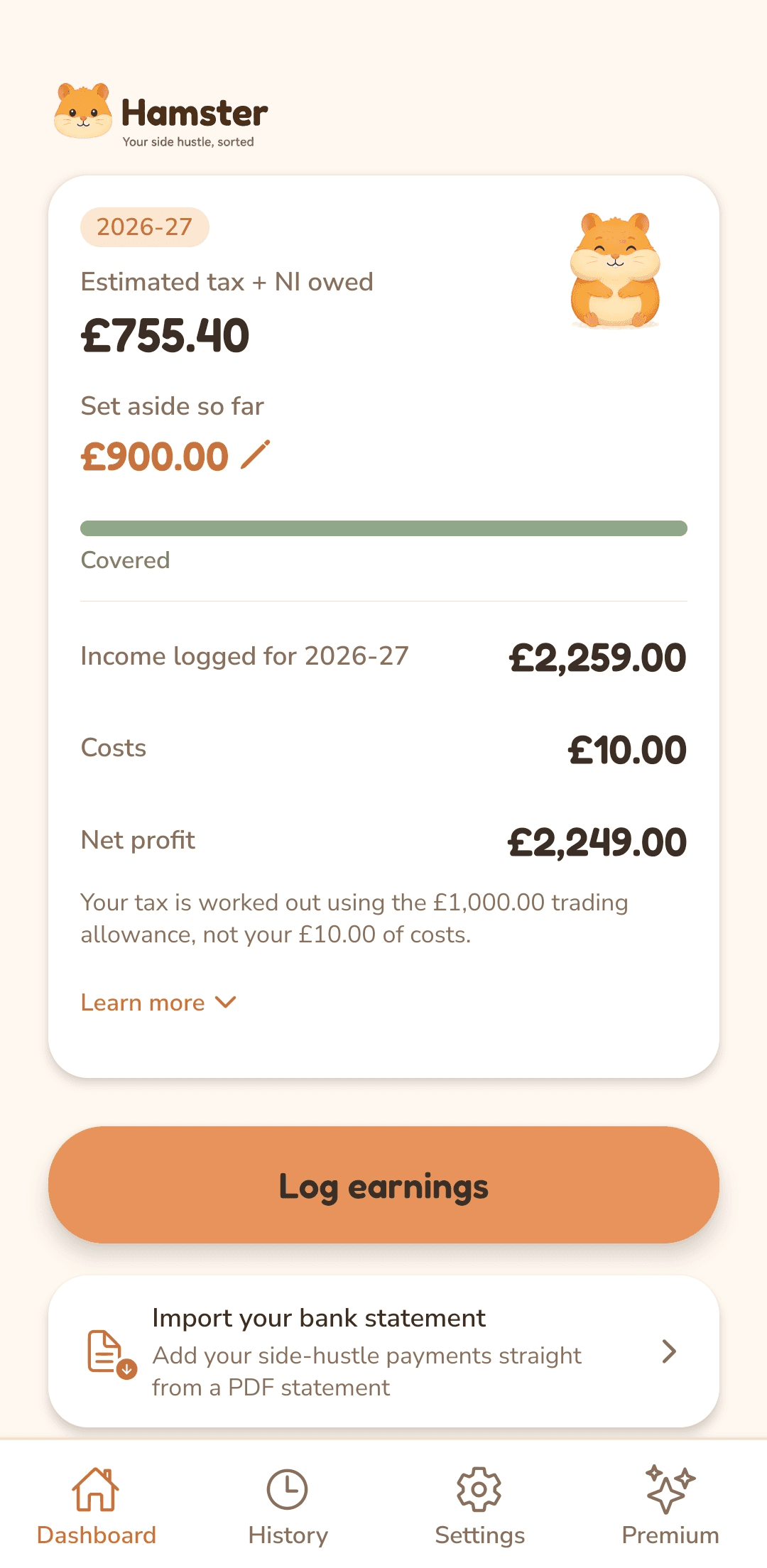
Dashboard
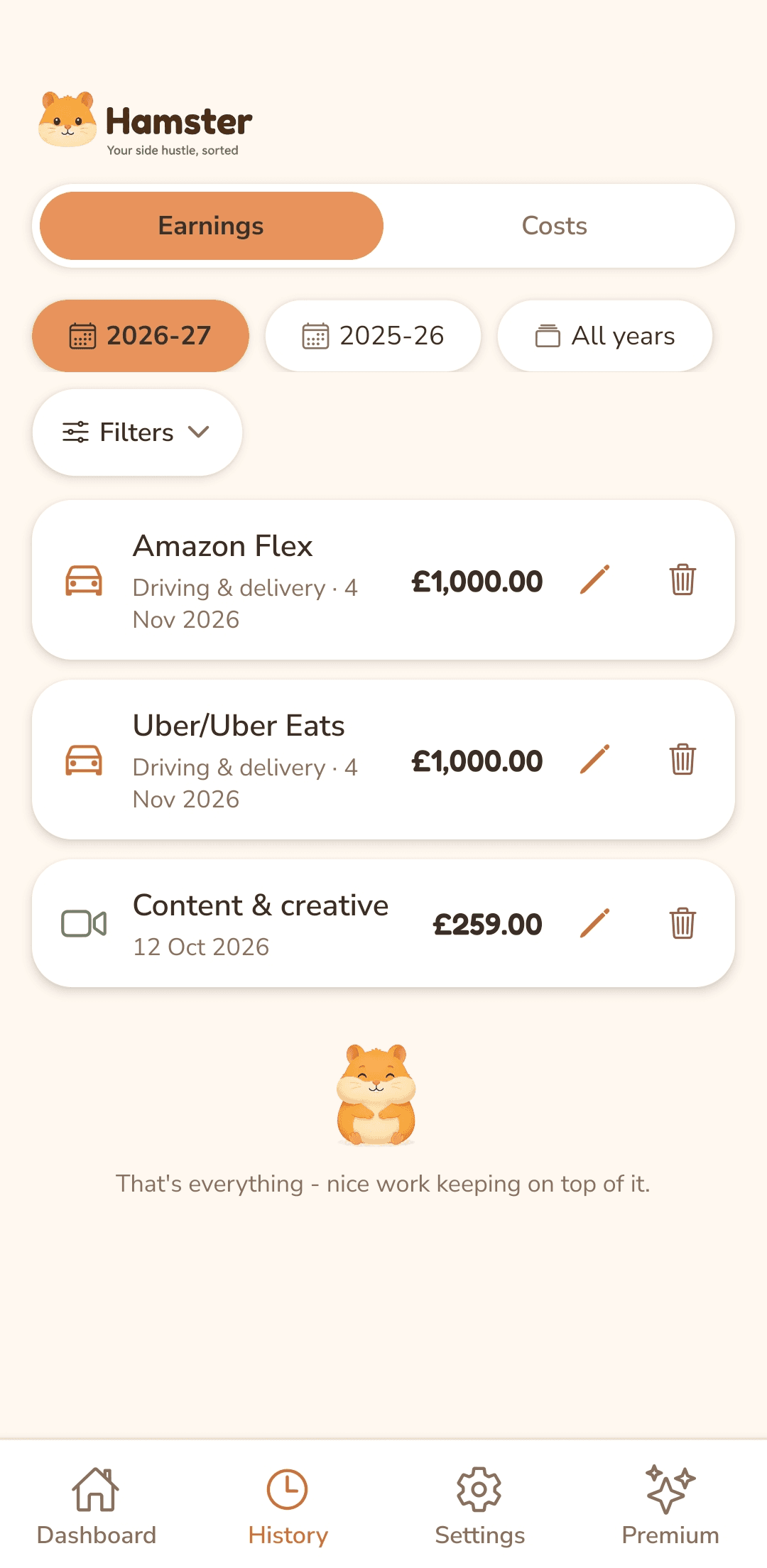
History
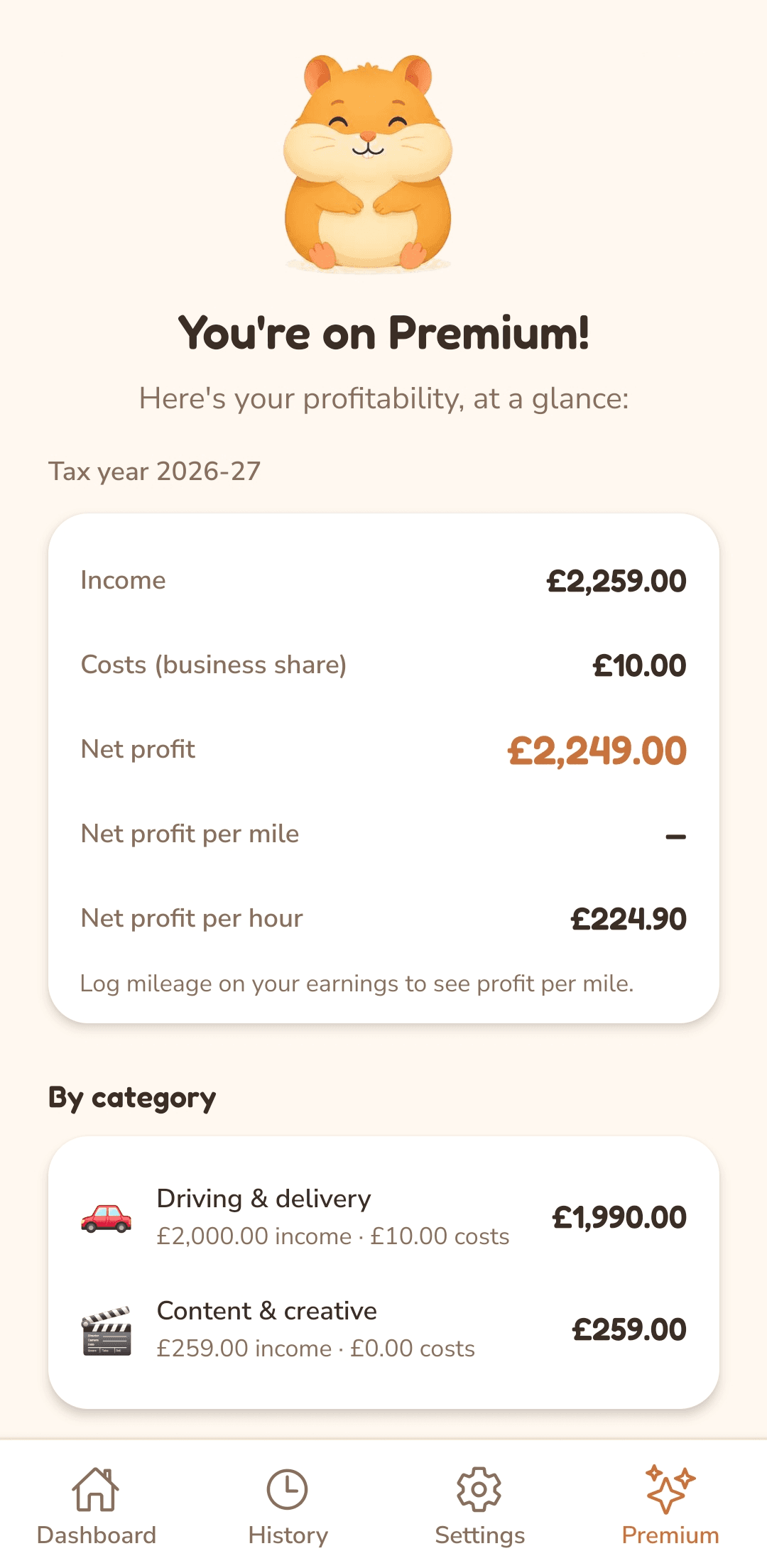
Premium summaryPremium
Quick answers
- What is an HMRC nudge letter?
- 'Nudge letter' isn't an official HMRC term. People use it for letters from HMRC that ask you to check your tax affairs and put anything right. Since 2024, digital platforms report sellers' earnings to HMRC, which is one of the sources of information HMRC holds.
- Does a letter mean I owe tax?
- Not necessarily. GOV.UK says a platform reporting your details doesn't automatically mean you owe tax, and selling your own unwanted things is unlikely to be taxable. Read what the letter asks you to do.
- How do I know the letter is really from HMRC?
- Check it against HMRC's published list of genuine letters on GOV.UK, and contact HMRC using details from GOV.UK rather than any phone number or link you're unsure of. You can report suspicious contact to HMRC.
- What if I owe tax from earlier years?
- GOV.UK says you should tell HMRC as soon as possible, and that if you contact HMRC first, they may consider your case more favourably. If you don't usually send a return, you can register for Self Assessment to declare income from the last 4 years.
- Should I get an accountant?
- It's worth it if several years are involved, the amounts are large, you're unsure whether you were trading, or the letter mentions a check, penalties or deliberate behaviour. For a simple case of one year's side income, many people sort it out themselves.
- What if I can't pay what I owe?
- Still tell HMRC and file. You may be able to set up a payment plan to pay in instalments, if HMRC agrees it's affordable.
Sources
- GOV.UK: If you have not told HMRC about income
- GOV.UK: Check if a letter you've received from HMRC is genuine
- GOV.UK: Report HMRC scam emails, texts, phone calls and letters
- GOV.UK: Selling goods or services on a digital platform
- GOV.UK: Check if you need to tell HMRC about your income from online platforms
- GOV.UK: Change your Self Assessment tax return
- GOV.UK: If you cannot pay your Self Assessment tax bill
Last reviewed against GOV.UK. Figures are for the tax year named in each section. Report an error
This is general information, not personal tax advice. Rules and rates change: check the linked GOV.UK pages or speak to an accountant about your own situation.