
Why doesn't my payout match what I earned? Gross income vs bank deposits
Hamster team · Updated · Checked against GOV.UK
The short answer
Because platforms take their fees, commission and any refunds before they pay you, so the money in your bank is less than what you earned. Your tax return starts from your income before expenses: add the fees back to your payouts. The fees then count as a business cost, which you can claim as an expense unless you use the £1,000 trading allowance.
Why the numbers differ
Between a customer paying and money landing in your account, a platform usually takes something off:
- fees and commission for listing, selling or processing the payment
- refunds to buyers who returned something or cancelled
- sometimes taxes it has to deduct, which GOV.UK mentions in its platform guidance
So your bank shows payouts: what's left. Your tax return asks for turnover: HMRC's notes for the self-employment pages define it as the income your business received "before taking off any expenses", including fees and commissions you were paid.
The rule of thumb
Payouts received + fees the platform kept = your income before fees.
Then, separately, the fees are a cost of running your side hustle. You can claim them as an expense, unless you use the £1,000 trading allowance, which replaces all your expenses.
Try it with your own figures:
Payout to gross income
Open the full toolEnter what the platform paid you and the fees it kept. Use the same period for both, such as the tax year from 6 April to 5 April.
A worked reconciliation (invented figures)
These figures are made up to show the method. Jordan sells refurbished phone accessories through an online marketplace. For the 2025 to 2026 tax year:
| Amount | |
|---|---|
| Total payouts into Jordan's bank | £5,180 |
| Selling and payment fees the marketplace kept | £740 |
| Refunds to buyers, taken out of his sales | £260 |
| The marketplace's "total sales" figure | £6,180 |
Working back from the bank:
- Income before fees: £5,180 + £740 = £5,920. That's his turnover.
- Check against the marketplace: £6,180 of sales − £260 refunded = £5,920. It matches.
- Expenses: the £740 of fees, plus £1,900 of stock and parts = £2,640. That beats the £1,000 allowance, so he claims expenses.
- Profit: £5,920 − £2,640 = £3,280.
If he'd reported his £5,180 of payouts as income and claimed the £740 of fees as an expense, he'd have counted the fees twice, understating his profit by £740.
Getting the period right
Self Assessment uses the tax year, 6 April to 5 April. Platform reports under the digital platform rules cover the calendar year, and payouts can arrive days after a sale.
Most side hustlers use the cash basis, the default from 2024 to 2025: income counts when you receive it. So a payout that lands on 7 April belongs to the new tax year, even if the sale was in March.
Common mistakes
- Reporting payouts as income. That leaves the fees out of your turnover.
- Double-counting fees. If you report payouts, don't also claim the fees, or you'll understate your profit.
- Using the calendar-year report as it is. It's the wrong 12 months.
- Claiming fees with the trading allowance. The allowance replaces all expenses, fees included.
- Forgetting smaller platforms. Add every platform's income together, then compare it with £1,000.
Doing it from your bank
If the platform's own reports are hard to get, start from your bank statements: our guide to working out your side-hustle income from bank statements shows a manual method. Hamster is a free app for Android and iPhone, and with Premium its bank statement import picks the platform payouts out of a PDF statement on your phone, for you to check before anything is saved.
See it in the app
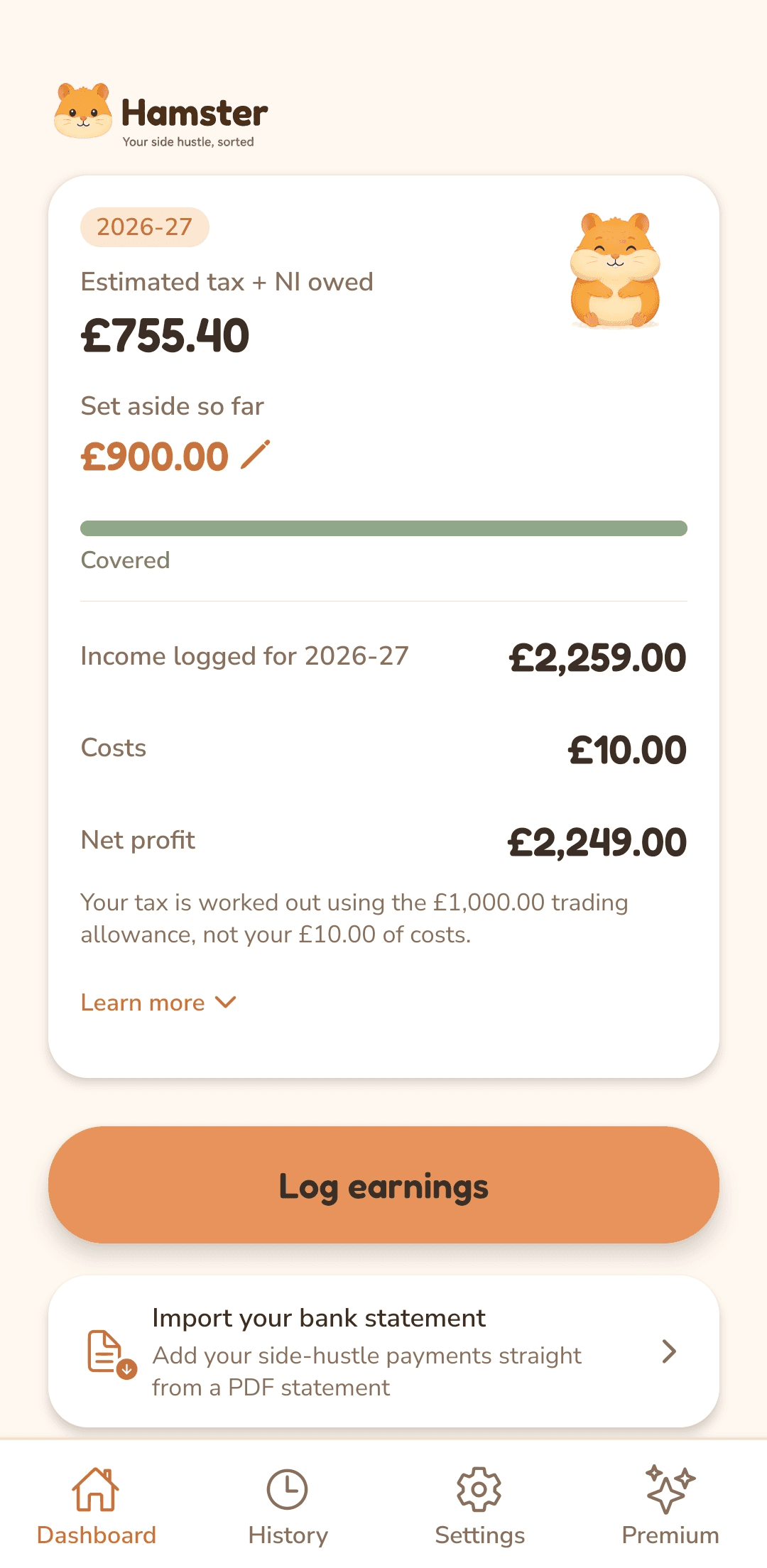
Dashboard
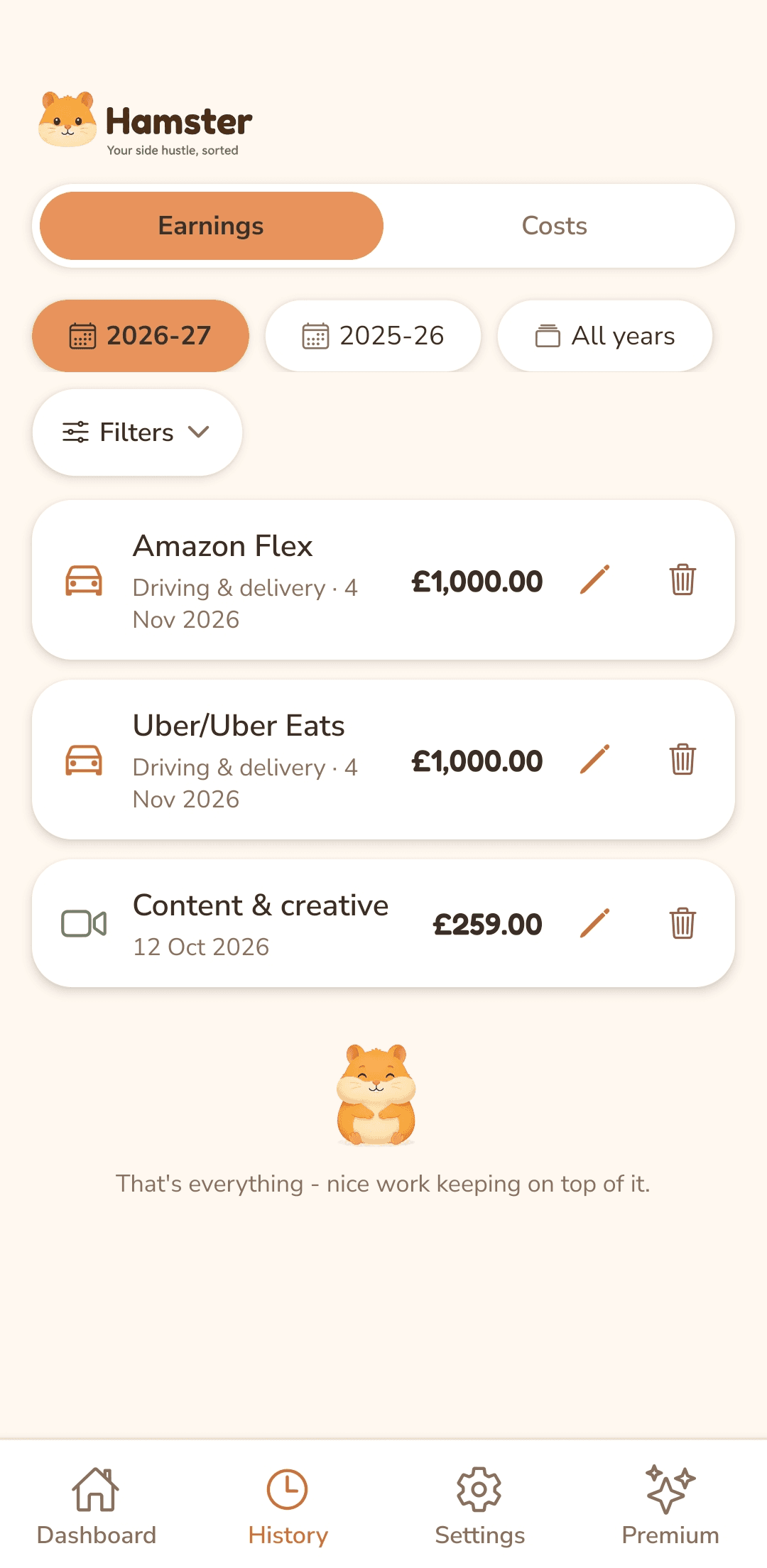
History
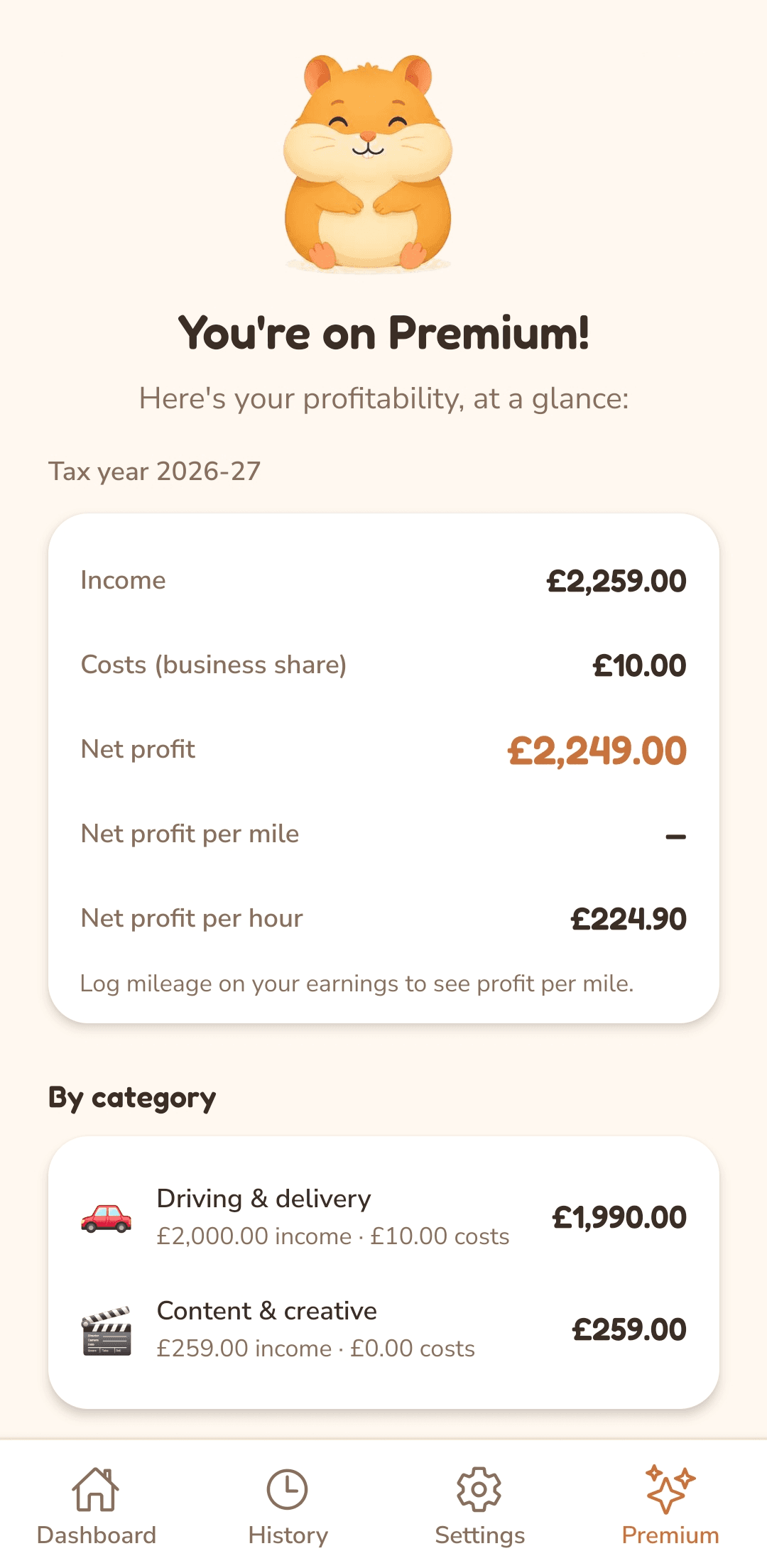
Premium summaryPremium
Quick answers
- Should I report my payouts or my sales?
- Your turnover is the income your business received before taking off any expenses, according to HMRC's notes for the self-employment pages. Payouts have fees taken off already, so add the fees back.
- Are platform fees tax-deductible?
- They're a cost of running your side hustle, so you can claim them as expenses when you work out your profit using expenses. If you claim the £1,000 trading allowance instead, you can't claim any expenses.
- Why doesn't my platform's annual report match my bank?
- The report you get under the digital platform rules shows earnings less fees, by calendar quarter. Your bank shows payouts on the dates they arrived, which can lag a sale by days. And neither runs from 6 April to 5 April like the tax year.
- What about payouts that cross the end of the tax year?
- Most side hustlers use the cash basis, the default since 2024 to 2025, where income counts when you receive it. A payout received on 7 April belongs to the new tax year.
- Do refunds count as income?
- Money the platform returned to a buyer isn't money you kept, so our worked example leaves it out. That's arithmetic on the cash basis rather than a quoted HMRC rule: if refunds are a large part of your sales, check how to record them with HMRC or an accountant.
- Is there a quicker way than adding it all up by hand?
- Hamster's bank statement import (Premium) reads a PDF statement on your phone and lists the payments that look like side-hustle income for you to check. You'd still add the platform's fees from its own reports.
Sources
Last reviewed against GOV.UK. Figures are for the tax year named in each section. Report an error
This is general information, not personal tax advice. Rules and rates change: check the linked GOV.UK pages or speak to an accountant about your own situation.