Free tool
Do I need to register for Self Assessment?
If your side-hustle income was more than £1,000 in a tax year, before costs, you need to register for Self Assessment by 5 October after that tax year ends. For other untaxed income, GOV.UK says to contact HMRC if it’s over £1,000 up to £2,500, and to register if it’s over £2,500.
It works in your browser: nothing you type is stored or sent anywhere.
Enter your side-hustle income and pick a tax year to see your answer. Want HMRC’s own version? Use HMRC’s checker.
An estimate, not tax advice. Check GOV.UK, or speak to an accountant about your own situation.
How the checker works
It applies the three rules on GOV.UK’s trading allowance page, word for word:
- gross trading income over £1,000: register for Self Assessment
- other gross income over £1,000 up to £2,500: contact HMRC
- other income over £2,500: register for Self Assessment
The tax year sets the dates. You register by 5 October after the tax year ends: 5 October 2026 for 2025 to 2026, and 5 October 2027 for 2026 to 2027. The online return and payment are due the following 31 January.
It doesn’t cover rental income (which has its own £1,000 property allowance), Capital Gains Tax, the High Income Child Benefit Charge or income from abroad. If any of those apply, use HMRC’s checker instead.
Worked examples
Priya
Priya walked dogs for £850 in 2025 to 2026 and had no other untaxed income. Result: nothing to tell HMRC about this income. £850 is within the £1,000 trading allowance. Keep a record of it anyway.
Sam
Sam sold £2,300 of handmade prints on Etsy in 2026 to 2027. Result: register for Self Assessment. Register by 5 October 2027, then file and pay by 31 January 2028.
Jo
Jo made £600 tutoring and £1,800 in tips that weren’t taxed through payroll in 2025 to 2026. Result: contact HMRC about the other income. The tutoring is under the £1,000 trading allowance, but the tips are other income over £1,000 up to £2,500.
Over the line? Our guide to whether you need to do a tax return for side income covers what happens next.
Questions people ask
- Is the £1,000 limit before or after expenses?
- Before. GOV.UK measures the trading allowance against your gross trading income: everything you were paid, before taking off costs. £1,300 of sales that cost you £700 to make is still over £1,000.
- Is it £1,000 per side hustle?
- No. It is one allowance for all your trading income added together. £600 from dog walking and £600 from selling crafts is £1,200, which is over the limit.
- Does my job’s salary count towards the £1,000?
- No. Wages taxed through PAYE are separate. Having a job doesn’t change the £1,000 rule for your side hustle either way.
- What if I missed the 5 October 2026 deadline?
- Register now. GOV.UK says that if you register after 5 October 2026, HMRC will give you a deadline to file that is 3 months from the date on its letter or email, but you must still pay the tax you owe by 31 January 2027.
- Do I need to register if I only sold my own unwanted things?
- Selling personal belongings you no longer want isn’t trading, so it isn’t trading income for this check. Buying things to resell, or making things to sell, is trading.
- Can I register even if I’m under £1,000?
- Yes. GOV.UK lists reasons to: you made a loss and want to claim relief, you want to pay voluntary Class 2 National Insurance, or you want to claim Tax-Free Childcare or Maternity Allowance based on your self-employment.
- Is this the same as HMRC’s own checker?
- No. This checker covers the side-income rules on GOV.UK’s trading allowance page only. HMRC’s own tool asks about every kind of income and is the one to trust if you have anything else going on.
Sources
Related guides and tools
Last reviewed against GOV.UK. Report an error
See it in the app
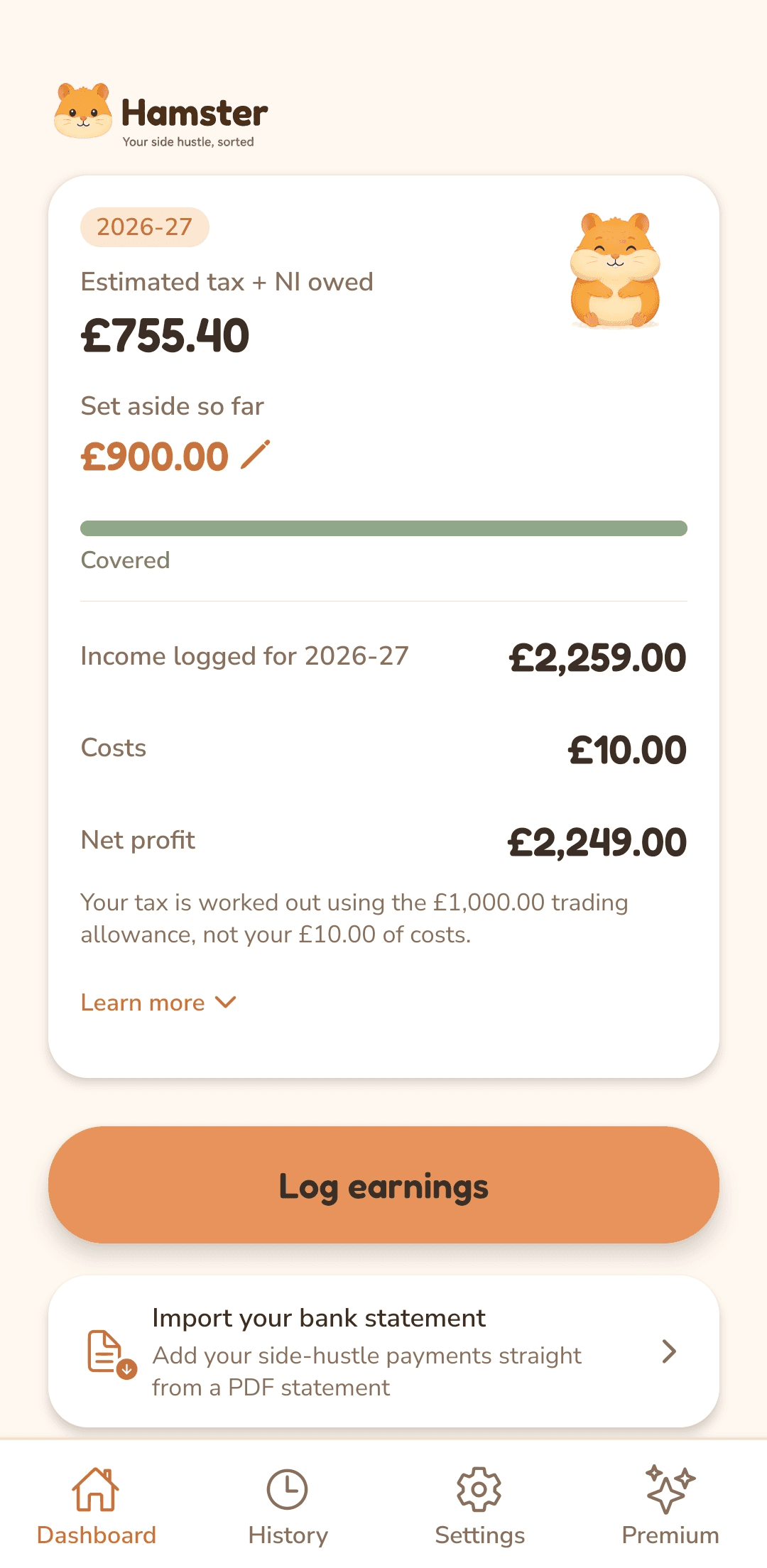
Dashboard
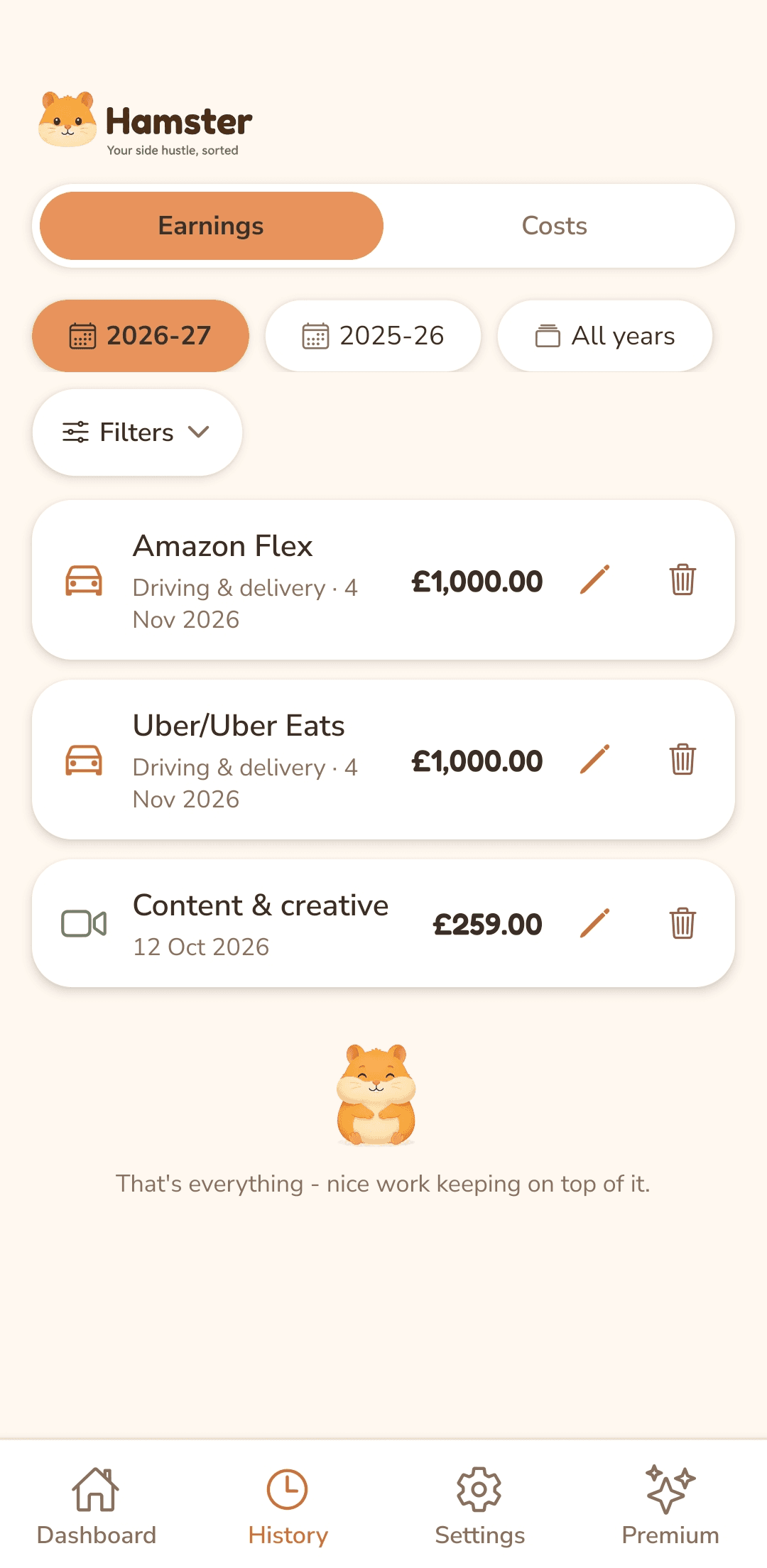
History
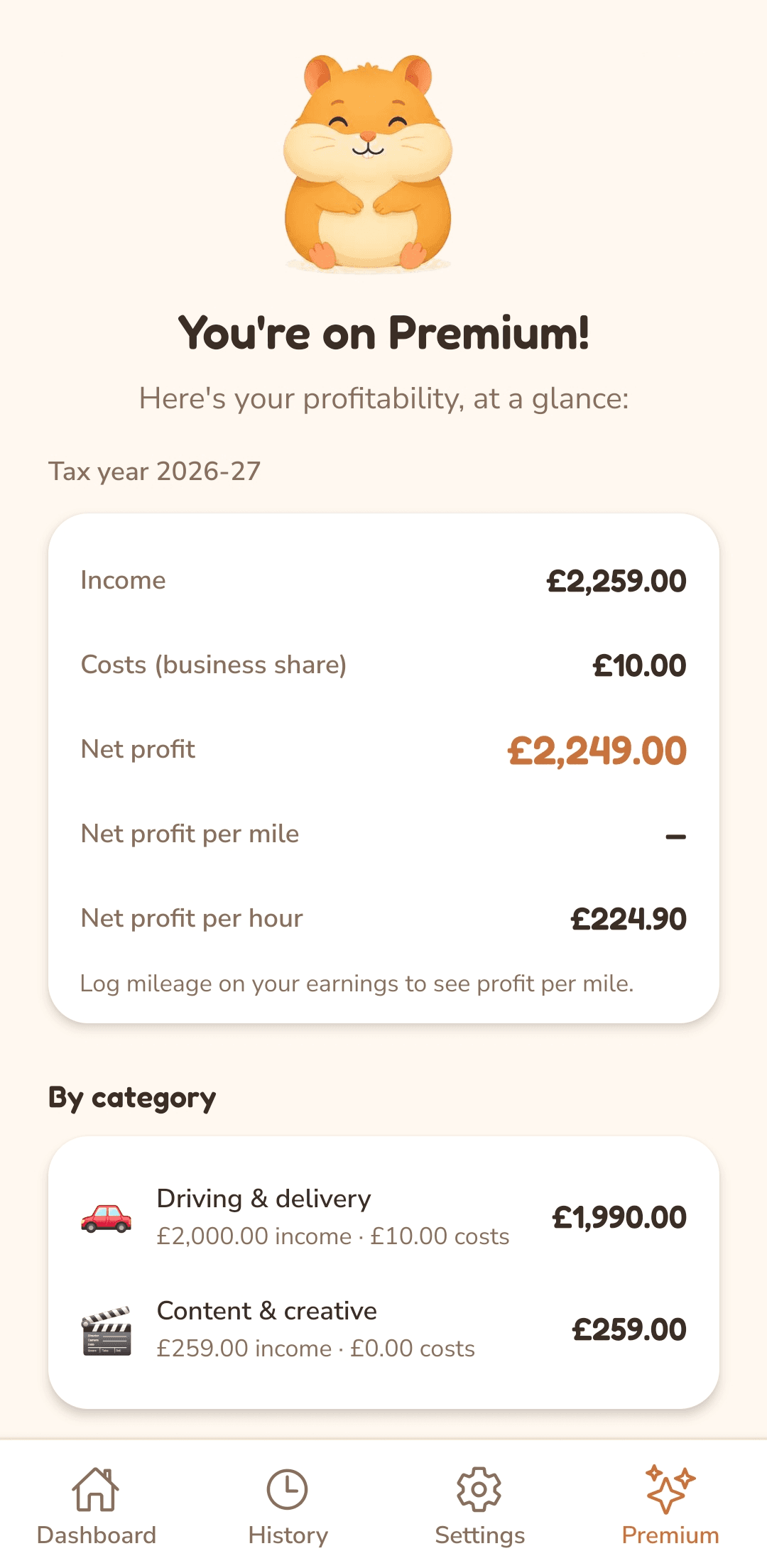
Premium summaryPremium
Free to download. Estimates, not tax advice.