
Free tool
Trading allowance calculator
If your allowable expenses come to less than £1,000, claiming the £1,000 trading allowance leaves you with less taxable profit; if they come to more, claim your expenses. You can’t claim both, and if your side-hustle income is £1,000 or less the allowance covers all of it.
It works in your browser: nothing you type is stored or sent anywhere.
Enter your income to compare. It uses the £1,000 allowance for 2025 to 2026 and 2026 to 2027.
An estimate, not tax advice. Check GOV.UK, or speak to an accountant about your own situation.
How it works
Your taxable profit is your income minus either the £1,000 allowance or your actual expenses. The calculator works out both and shows the lower one, using the rules on GOV.UK’s trading allowance page.
To put a pound figure on the difference, it multiplies the gap in profit by the basic rate (20%) and higher rate (40%) of Income Tax for England, Wales and Northern Ireland. If your profit is over £12,570, Class 4 National Insurance (6% for 2026 to 2027) adds to the saving. For your whole bill, use the side hustle tax calculator.
Expenses means allowable business costs: stock, materials, platform fees, the business share of your phone, and so on. Mileage at the flat rate counts as an expense, so it only helps if you claim expenses.
Worked examples
Low costs: the allowance wins
Maya tutors online and is paid £4,000 in the year. Her costs are £300 for books and a subscription.
- With the allowance: £4,000 − £1,000 = £3,000 profit
- With expenses: £4,000 − £300 = £3,700 profit
- The allowance wins by £700 of profit: about £140 less tax at 20%.
High costs: expenses win
Tom refurbishes bikes and sells them for £4,000 in the year. Parts, tools and fees cost him £1,800.
- With the allowance: £4,000 − £1,000 = £3,000 profit
- With expenses: £4,000 − £1,800 = £2,200 profit
- Expenses wins by £800 of profit: about £160 less tax at 20%.
Under £1,000: full relief
Lee earns £900 from occasional gardening jobs and spends £100 on tools.
Full relief. £900 is within the allowance, so there’s no tax on it and usually nothing to tell HMRC. Lee should still keep a record of the income.
Questions people ask
- Can I claim the trading allowance and expenses together?
- No. GOV.UK says that if you claim the allowance you cannot deduct any other expenses or allowances. That includes the flat-rate mileage allowance.
- What is full relief and partial relief?
- Full relief is when your gross trading income is £1,000 or less: the allowance covers all of it. Partial relief is when your income is over £1,000 and you deduct the £1,000 allowance instead of your expenses.
- Can the allowance create a loss?
- No. GOV.UK says you can deduct up to £1,000, but not more than your income. If your expenses are more than your income, GOV.UK says it may be better to claim expenses.
- Can I switch between the allowance and expenses each year?
- Yes. You choose on your tax return each year, so you can claim the allowance one year and expenses the next.
- Who can’t use the trading allowance?
- You can’t use it on income from your employer (or your spouse’s or civil partner’s employer), or from a company or partnership that you or someone connected to you owns, controls or is a partner in. It doesn’t apply to partnership trading income.
- Does the allowance affect benefits?
- GOV.UK says deducting the allowance reduces your income for tax credits, the High Income Child Benefit Charge, student loan repayments and the married couple’s allowance. It says income for Universal Credit is not affected by the allowance.
- Is the allowance going up to £3,000?
- The government has announced a rise to £3,000 from 6 April 2027, subject to the Finance Bill. It isn’t law yet, and it doesn’t change 2025 to 2026 or 2026 to 2027, so this calculator uses £1,000.
Sources
Related guides and tools
Last reviewed against GOV.UK. Report an error
See it in the app
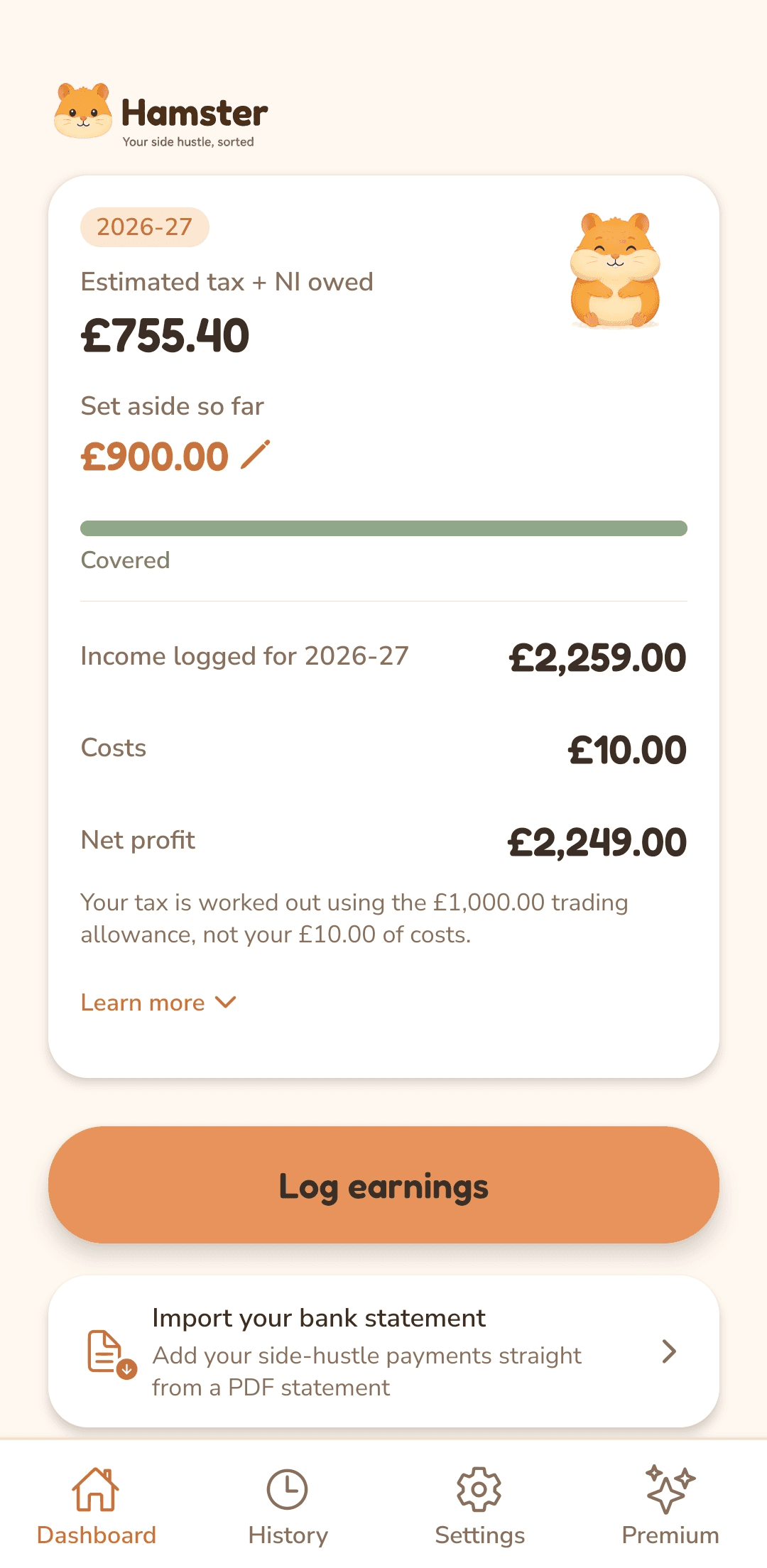
Dashboard
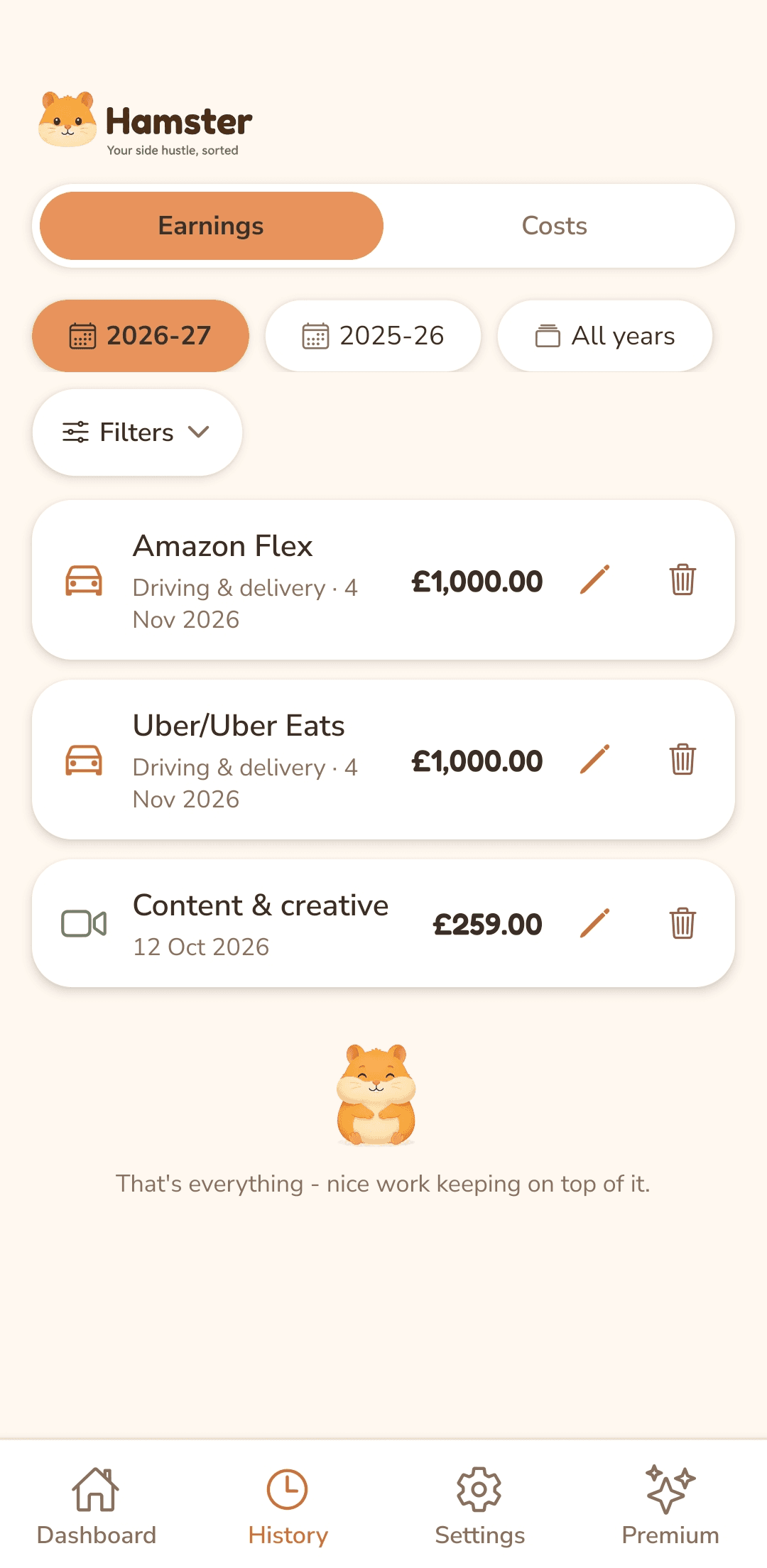
History
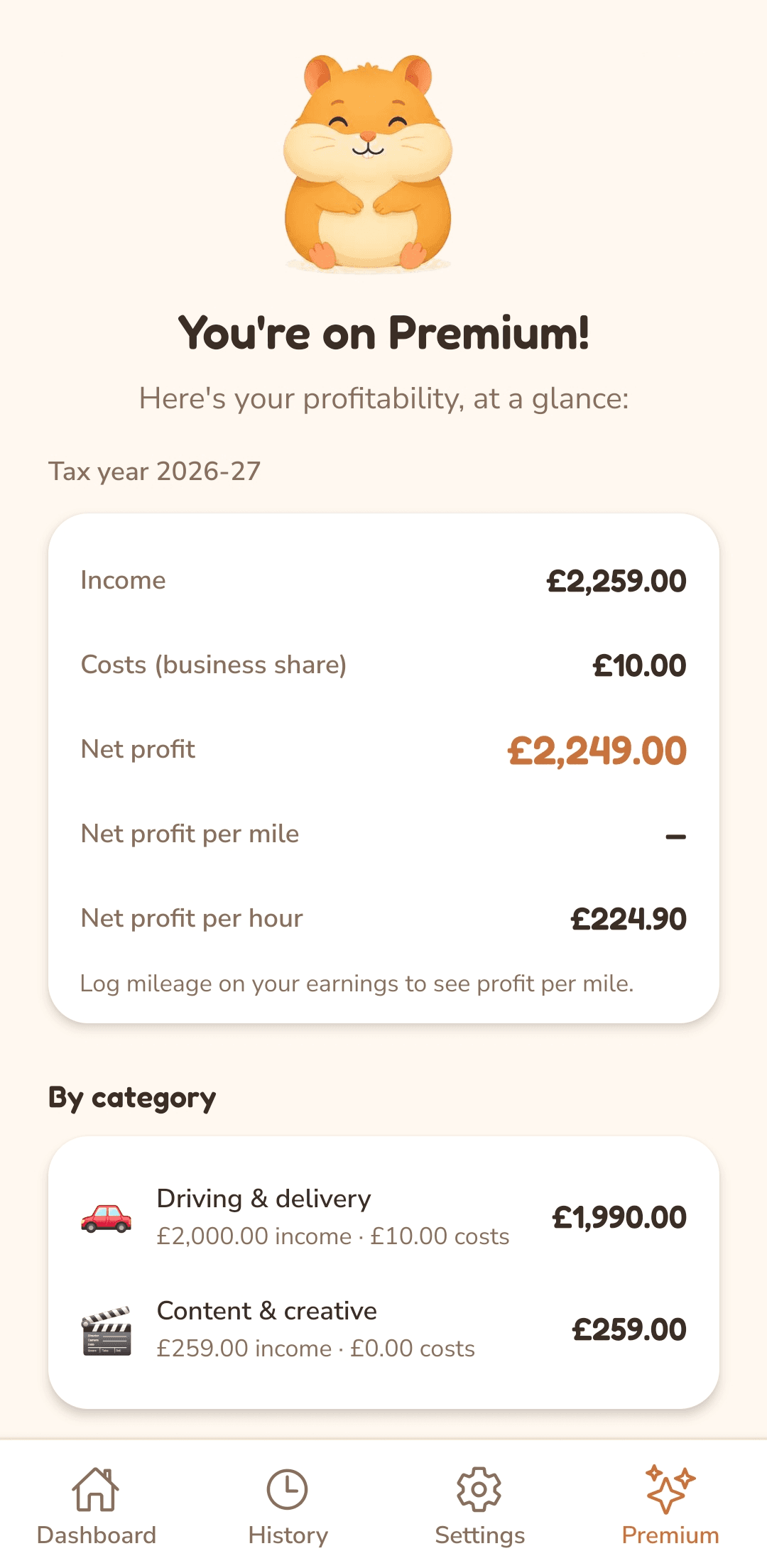
Premium summaryPremium
Free to download. Estimates, not tax advice.