
How much tax will I pay on £2,000, £5,000, £10,000 or £20,000 of side hustle income?
Hamster team · Updated · Checked against GOV.UK
The short answer
It depends on your other income. With a £30,000 job and costs under £1,000, the estimated tax is £200 on £2,000 of side hustle income, £800 on £5,000, £1,800 on £10,000 and £4,185.80 on £20,000, including National Insurance. With no other income, the first £12,570 of profit is tax-free, so £20,000 costs £1,671.80. The figures are the same for 2025–26 and 2026–27.
The lookup table
Estimated Income Tax and Class 4 National Insurance on side hustle income, for the 2026–27 tax year. Find your side hustle income on the left and your other income across the top.
£2,000 of side hustle income
- No other income
- £0nothing to pay
- With a £30,000 job
- £200about £17 a month
- With a £60,000 job
- £400about £33 a month
£5,000 of side hustle income
- No other income
- £0nothing to pay
- With a £30,000 job
- £800about £67 a month
- With a £60,000 job
- £1,600about £133 a month *
£10,000 of side hustle income
- No other income
- £0nothing to pay
- With a £30,000 job
- £1,800about £150 a month *
- With a £60,000 job
- £3,600about £300 a month *
£20,000 of side hustle income
- No other income
- £1,671.80£1,286 tax + £385.80 NIabout £139 a month *
- With a £30,000 job
- £4,185.80£3,800 tax + £385.80 NIabout £349 a month *
- With a £60,000 job
- £7,985.80£7,600 tax + £385.80 NIabout £665 a month *
| Side hustle income | No other income | With a £30,000 job | With a £60,000 job |
|---|---|---|---|
| £2,000 | £0nothing to pay | £200about £17 a month | £400about £33 a month |
| £5,000 | £0nothing to pay | £800about £67 a month | £1,600about £133 a month * |
| £10,000 | £0nothing to pay | £1,800about £150 a month * | £3,600about £300 a month * |
| £20,000 | £1,671.80£1,286 tax + £385.80 NIabout £139 a month * | £4,185.80£3,800 tax + £385.80 NIabout £349 a month * | £7,985.80£7,600 tax + £385.80 NIabout £665 a month * |
* A bill of £1,000 or more can mean payments on account towards next year, unless more than 80% of your tax is already collected through PAYE.
Every figure is worked out by the same code as our side hustle tax calculator, which uses the Hamster app's own tax rules.
What the table assumes
- Your costs are £1,000 or less, so the £1,000 trading allowance is deducted instead. £5,000 of income becomes £4,000 of profit.
- The rates for England, Wales and Northern Ireland. If you pay Scottish Income Tax, the bands are different and these figures don't apply.
- A standard £12,570 Personal Allowance, with the job's pay taxed through PAYE. The tax on the job itself isn't included: the table shows only the extra on top.
- No student loan, Capital Gains Tax or other income, such as savings interest over your allowance or rent.
The rates are the same for 2025–26, so the table also works for the return due by 31 January 2027.
Why your job makes such a difference
Income Tax is worked out on your total income, so your side hustle profit is taxed on top of your salary:
- No other income: the first £12,570 of profit is tax-free. Even £10,000 of side hustle income costs £0.
- A £30,000 job has already used the Personal Allowance, so every pound of profit is taxed at 20%, up to £50,270 in total.
- A £60,000 job puts you in the higher-rate band, so profit is taxed at 40%.
National Insurance works differently. Class 4 is worked out on your self-employed profit on its own, and only starts above £12,570: 6% up to £50,270 and 2% above. That's why only the £20,000 row has any: £385.80 on £19,000 of profit, whatever your salary. More in our guide to National Insurance on side hustle income.
A worked example with costs (invented figures)
Leon works full time on £30,000 and fixes up and sells bikes. In the tax year he takes £10,000 and spends £3,000 on bikes, parts and selling fees.
- His £3,000 of costs beat the £1,000 trading allowance, so he deducts the costs: profit £7,000.
- His salary has used his Personal Allowance, so the profit is taxed at 20%: £1,400.
- No Class 4 National Insurance: £7,000 is under £12,570.
- With the allowance instead, his bill would have been £1,800. Using his real costs saves him £400.
To see whether your own costs beat the allowance, try the trading allowance calculator.
When you pay, and how much to put aside
The bill for a tax year is due by 31 January after it ends. The table shows roughly what to set aside each month to have it ready.
If your bill is £1,000 or more, HMRC may also ask for payments on account: two advance payments towards next year, each normally half this year's bill. They don't apply if more than 80% of your tax was already collected at source, for example through PAYE. That's why your first January bill can be about one and a half times the figure in the table.
Even where the table says nothing to pay, you still need to register for Self Assessment and send a return once your trading income is over £1,000.
Common mistakes
- Reading the table against your sales without taking off costs. The table assumes costs of £1,000 or less. If yours are higher, your tax is lower.
- Forgetting your other income. The same side hustle can cost nothing or 40% depending on your job.
- Adding National Insurance at your salary's rate. Class 4 is on your side hustle profit alone, and only above £12,570.
- Assuming no tax means no return. Over £1,000 of trading income, you still need to register and file.
- Using these figures in Scotland. Scottish Income Tax has different bands.
- Forgetting payments on account. A bill of £1,000 or more can mean paying half as much again in January.
Keeping track
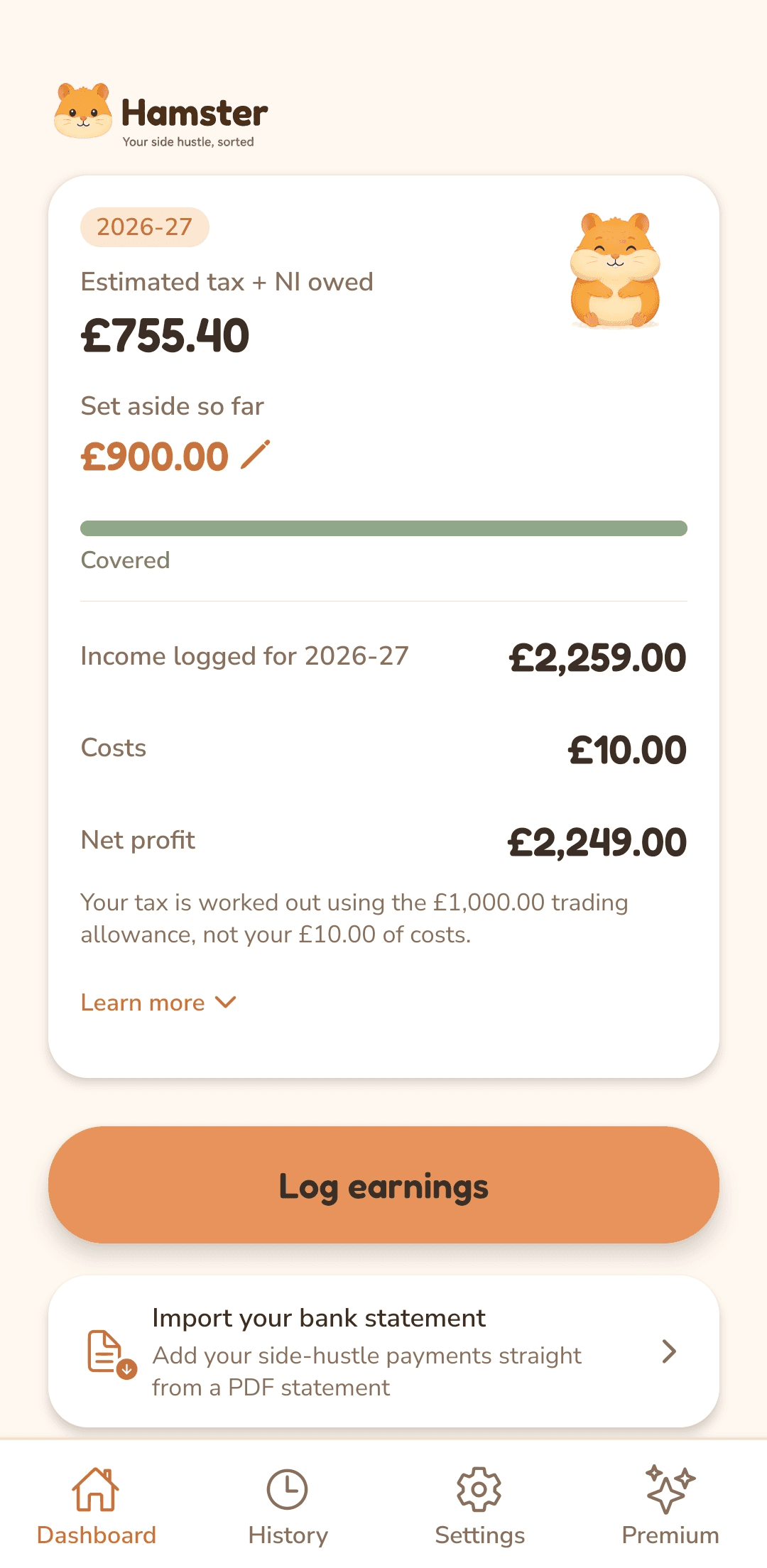
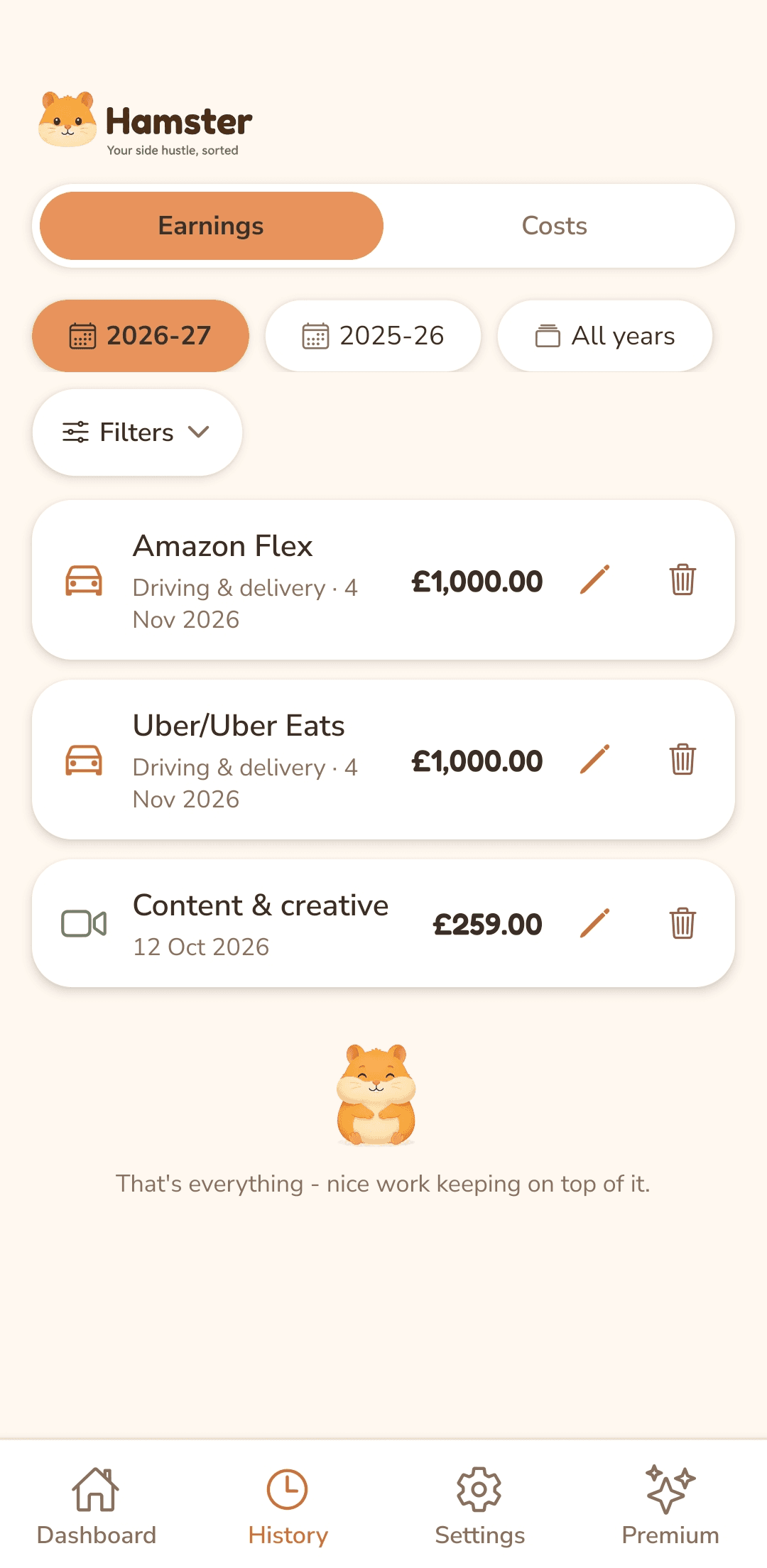
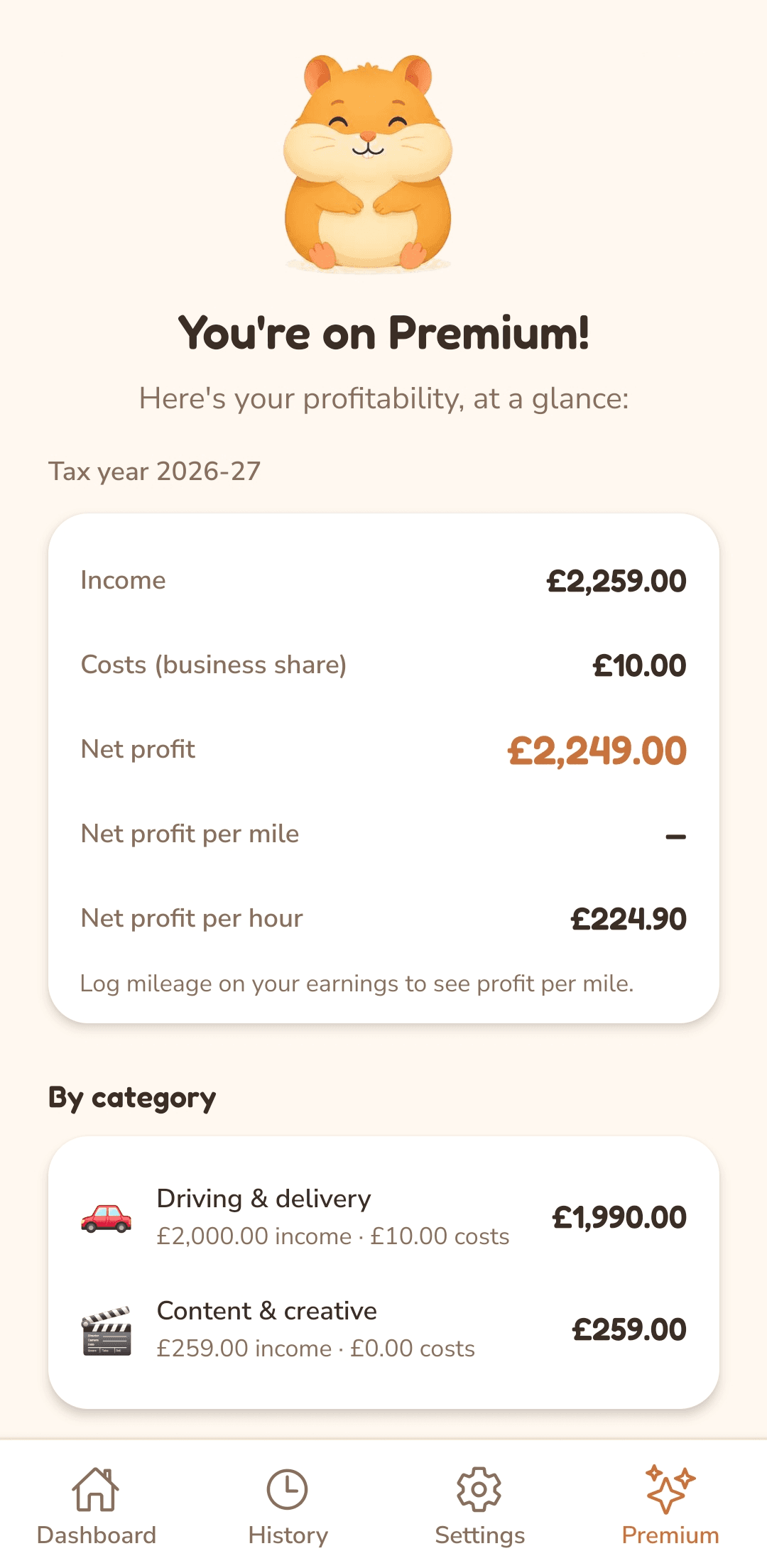
Your real figure won't be exactly £5,000 or £10,000. Hamster is a free app for Android and iPhone that works out your estimated Income Tax and National Insurance every time you log a sale or a cost, using the same rules as this table, so you always know what to set aside.
See it in the app
Dashboard
History
Premium summaryPremium
Quick answers
- How much tax do I pay on £5,000 of side hustle income?
- With costs under £1,000, about £800 if you also have a £30,000 job, £1,600 with a £60,000 job, and £0 if it's your only income. Your profit is £4,000 after the £1,000 trading allowance.
- How much tax do I pay on £10,000 of side income with a full-time job?
- On a £30,000 salary, about £1,800: 20% of the £9,000 profit left after the £1,000 trading allowance. On a £60,000 salary, about £3,600 at 40%. There's no Class 4 National Insurance, because the profit is under £12,570.
- Do I pay tax on £2,000 of side income?
- Yes, if you have other income that uses your Personal Allowance: about £200 with a £30,000 job. If it's your only income, there's nothing to pay, but you still need to register for Self Assessment because your trading income is over £1,000.
- What if my costs are more than £1,000?
- Then you deduct your actual costs instead of the trading allowance, and the tax is lower. £10,000 of income with £3,000 of costs and a £30,000 job is about £1,400, not £1,800.
- Are these figures right for my 2025–26 tax return?
- Yes, for the people in the table. The Income Tax bands, the Personal Allowance, the Class 4 rates and the £1,000 trading allowance were the same in 2025–26 as in 2026–27. They don't apply if you pay Scottish Income Tax.
- When do I pay it?
- By 31 January after the tax year ends: 31 January 2027 for 2025–26. If your bill is £1,000 or more you may also have to make payments on account towards the next year, unless more than 80% of your tax was collected through PAYE.
Sources
- GOV.UK: Income Tax rates and Personal Allowances
- GOV.UK: Income Tax rates and allowances for current and past years
- GOV.UK: Self-employed National Insurance rates
- GOV.UK: Rates and allowances: National Insurance contributions
- GOV.UK: Tax-free allowances on property and trading income
- GOV.UK: Payments on account
- GOV.UK: Scottish Income Tax
Last reviewed against GOV.UK. Figures are for the tax year named in each section. Report an error
This is general information, not personal tax advice. Rules and rates change: check the linked GOV.UK pages or speak to an accountant about your own situation.